
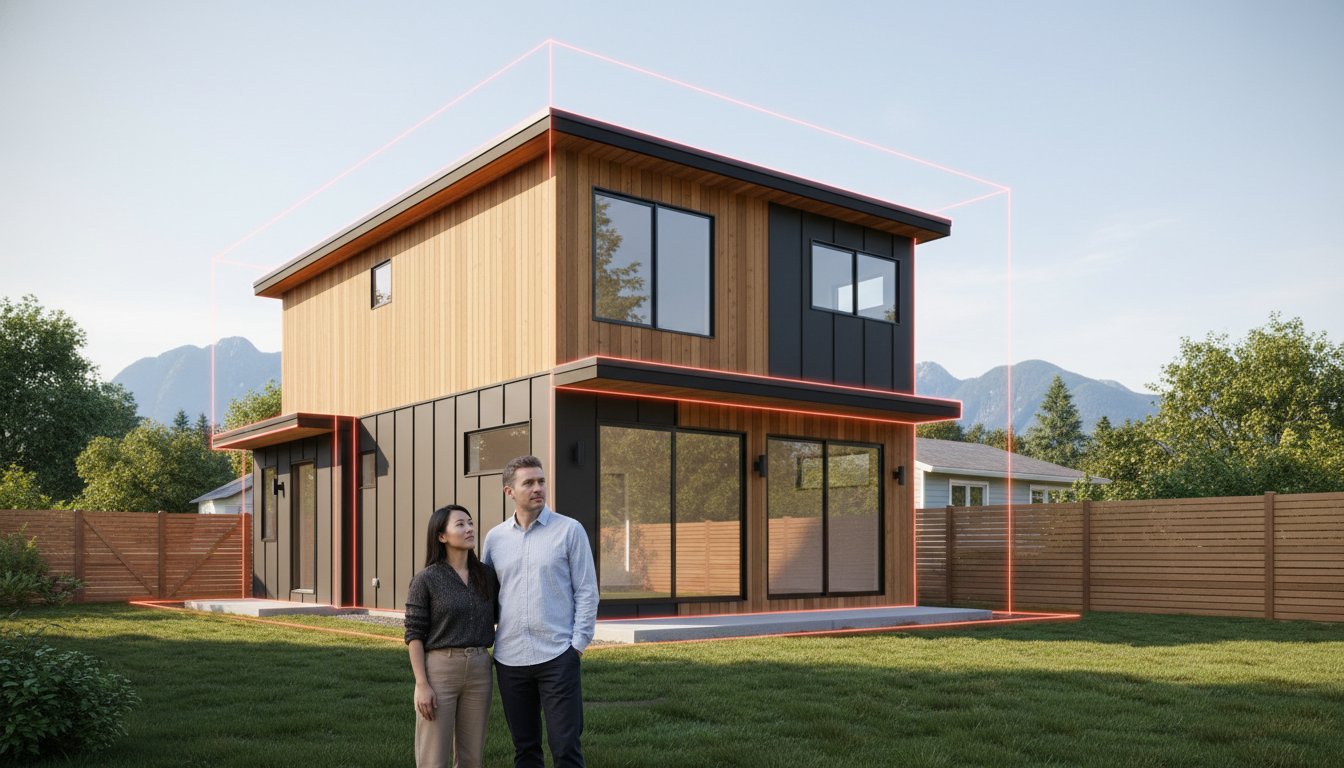
Why does the "construction chaos" narrative still dominate the conversation around the laneway home cost in Vancouver? You've likely heard the horror stories of permit timelines that stretch into years and utility connection fees that suddenly appear mid-build. It's exhausting to plan for your family's future when the financial goalposts feel like they're constantly moving. You want a clear path to a high-quality asset that increases your property equity, not a list of expensive surprises.
We believe that predictability is the ultimate luxury. This guide offers a comprehensive breakdown of every dollar required for your project, ensuring you account for each expense from the start. We'll navigate the latest 2026 regulations, including the 20% reduction in Development Cost Levies and the specific Metro Vancouver utility charges that often catch homeowners off guard. By the end of this article, you'll have a streamlined roadmap to realize your vision through a unified and disciplined building process that replaces anxiety with controlled excitement.
Key Takeaways
- Distinguish between hard and soft costs to build a realistic financial foundation for your 2026 project.
- Identify site-specific variables like utility upgrades and soil conditions that often lead to unexpected budget spikes.
- Discover how 3D VR walkthroughs and integrated design-build models eliminate the gap between vision and execution.
- Gain a precise understanding of the laneway home cost Vancouver residents can expect, including the latest municipal fee reductions.
- Learn how digital project management portals provide total transparency and accountability from the first permit to the final finish.
Understanding the 2026 Laneway Home Landscape in Vancouver
The 2026 market doesn't look like the market of five years ago. Many homeowners still reference outdated figures from 2018 or 2020, but the "simple shed" era has ended. Today, a modern laneway home is a fully detached, high-efficiency secondary residence built to the same standards as a primary custom home. While the History of Laneway Housing in Vancouver began as a way to increase density in single-family neighbourhoods, it has evolved into a sophisticated architectural category. These are no longer just "coach houses" or "garden suites" tucked behind a garage. They are high-end assets that require professional design and disciplined project management.
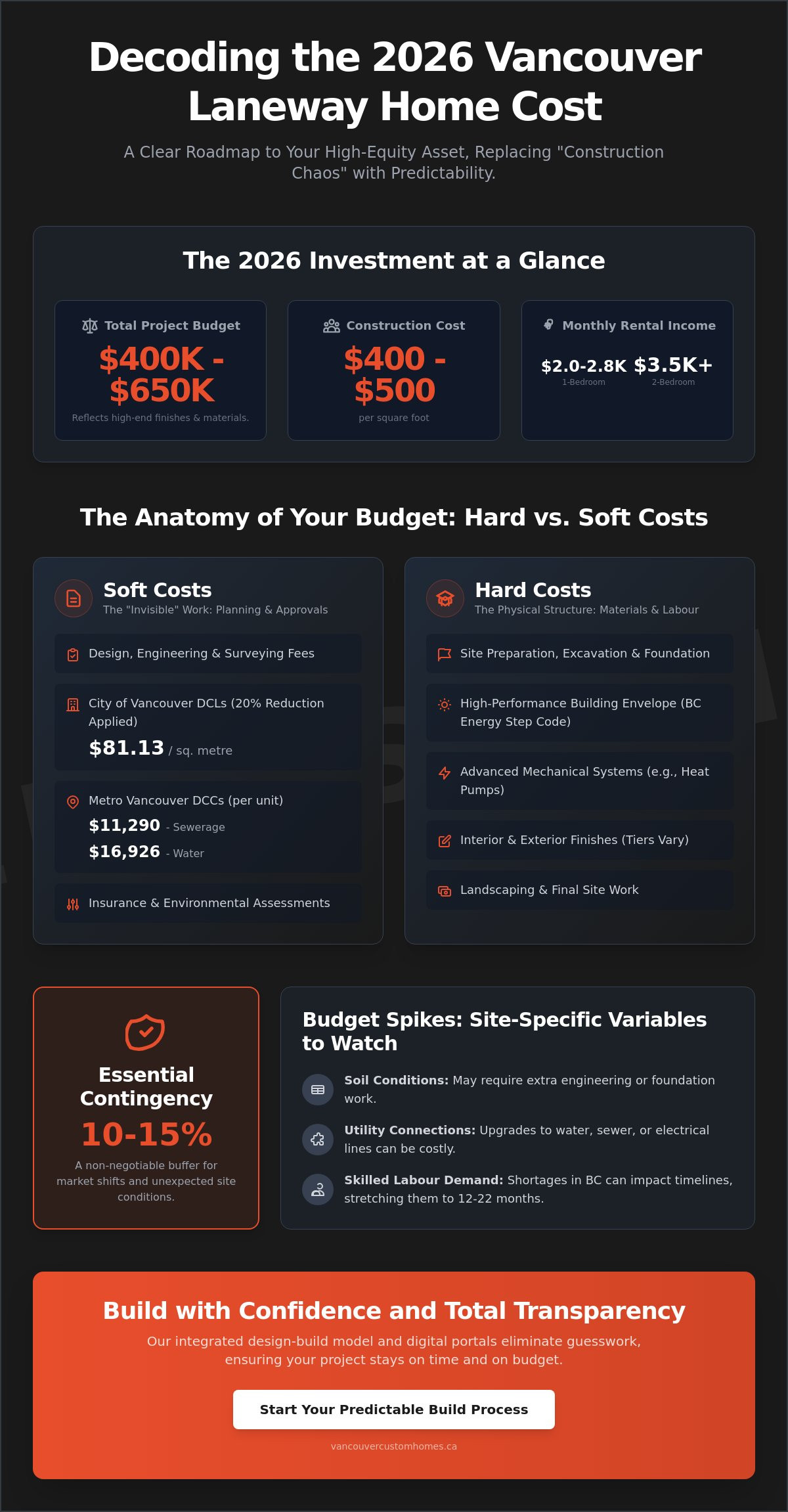
Industry data for 2026 suggests that construction costs now range between $400 and $500 per square foot. Total project budgets typically fall between $400,000 and $650,000. These figures reflect the reality of current material inflation and the high level of finish required to compete in the Metro Vancouver rental market. If you're planning a build, you must move beyond the "construction chaos" narrative and look at the hard data. The laneway home cost Vancouver residents face is a significant investment, but it's one rooted in long-term financial stability.
Why Vancouver Homeowners are Investing in 2026
Why is now the time to build? The rental market continues to see 1-bedroom units commanding $2,000 to $2,800 monthly; meanwhile, 2-bedroom units often reach $3,500. Beyond the "mortgage helper" aspect, families are using these builds to keep aging parents close or provide adult children with a private space. Adding a legal suite is one of the most effective ways to increase property equity in the Lower Mainland. It transforms a standard lot into a multi-unit asset that remains resilient against market fluctuations. You aren't just building a house; you're creating a centre for family while maintaining necessary privacy.
The Reality of Modern Construction Costs
The base laneway home cost Vancouver owners face is heavily influenced by the BC Energy Step Code. These requirements ensure a high-efficiency build but require specialized mechanical systems, such as advanced heat pumps and superior insulation. Labour shortages also play a role. Skilled trades are in high demand across BC, which can stretch occupancy timelines to 12 or 22 months if the project isn't managed with precision. Relying on "average" cost estimates from outdated blogs is a mistake. Every lot has unique challenges, from soil conditions to utility access, that require a site-specific budget. We focus on eliminating the ambiguity that leads to mid-project financial stress.
The Essential Breakdown: Hard Costs vs. Soft Costs
To build with total confidence, you must first deconstruct the invoice. The total laneway home cost Vancouver homeowners encounter is split into two distinct categories: soft costs and hard costs. Soft costs cover the "invisible" work like permits, engineering, and design. Hard costs represent the physical structure, from the concrete in the foundation to the shingles on the roof. Miscalculating either side of this equation is the leading cause of project stalls. In 2026, a non-negotiable 10 to 15 percent contingency buffer is essential to absorb market shifts or site discoveries. A disciplined budget isn't just about the numbers you expect; it's about being prepared for the variables you don't.
Soft Costs: Navigating Permits and Professional Fees
Municipal fees are often the biggest surprise for the unprepared. As of 2026, the City of Vancouver provides a 20 percent reduction on Development Cost Levies (DCLs), bringing the combined rate to $81.13 per square metre. However, regional Development Cost Charges (DCCs) remain a significant factor. Metro Vancouver's 2026 rates include $11,290 for sewerage and $16,926 for water per dwelling unit. This 2026 Vancouver Laneway House Cost Breakdown highlights why professional surveying and environmental assessments are mandatory expenses. Choosing a tailored custom home design allows you to optimize these fees by aligning your vision with specific municipal bylaws from day one.
Hard Costs: Materials, Labour, and the Building Envelope
Hard costs start at the ground and move up. Meeting 2026 energy efficiency standards requires high-performance building envelopes and advanced mechanical systems. These components increase the baseline material cost but drastically lower long-term utility bills for your tenants or family. Interior finishing tiers also dictate the final laneway home cost Vancouver residents pay. A functional rental unit uses durable, cost-effective materials, whereas a luxury suite features custom millwork and premium stone. External factors also influence the labour budget. If your laneway is narrow or lot access is restricted, expect higher costs for material staging and handling. Design complexity directly dictates the final invoice; a simple, efficient layout is always more predictable than a multi-angled structure with custom rooflines.
We focus on eliminating the gap between the architect's vision and the builder's reality. By integrating these costs early, we ensure your project remains a high-quality asset rather than a financial burden. Predictability in construction is achieved through foresight, not by cutting corners on the building envelope.
Hidden Variables: Site Preparation and Utility Connections
Why do so many laneway projects exceed their initial estimates? It's rarely the cost of the kitchen cabinets or the flooring. Instead, it's usually what's hidden beneath the surface. The "ground-up" challenge is the primary culprit in fluctuating project totals. While the base laneway home cost Vancouver residents anticipate covers the structure, site-specific variables like soil stability and underground infrastructure are often overlooked during the honeymoon phase of design. If your backyard has poor drainage or contains old construction debris, your foundation costs will climb before the first wall is even framed.
The Complexity of Utility Tie-ins
Older Vancouver lots typically feature 100-amp electrical service, which is insufficient for a modern, high-efficiency secondary residence. Upgrading to 200-amp or even 400-amp service is a standard requirement to handle the load of heat pumps and electric vehicle charging. BC Hydro has strict regulations for secondary services that vary across Vancouver and Burnaby. We often recommend separating meters for rental properties. This allows for transparent billing between the primary house and the laneway suite, though it does add to the initial setup fee. You must also account for the 2026 Metro Vancouver utility charges: $11,290 for sewerage and $16,926 for water. Sloped lots require additional civil engineering for storm-water management to prevent run-off issues with neighbouring properties.
Site Access and Tree Protection
The Vancouver Tree Bylaw is a significant factor in your total budget. A single protected cedar or maple tree can cost thousands in protection barriers and arborist reports. Fines for non-compliance are steep; they can easily derail the financial logic of your build. Staging is another hurdle, particularly in high-density areas like East Vancouver or Kitsilano. If your laneway is too narrow for large delivery trucks, material handling becomes a manual, labour-intensive process. You must also factor in the cost of demolishing existing garages. Debris removal and disposal fees have increased, making the "clean slate" phase more expensive than in previous years.
Finally, remember to budget for landscaping and restoration. Creating a private, well-defined entrance for the laneway house is essential for maximizing rental income and property equity. This ensures the new unit feels like a permanent, integrated part of your lot rather than an afterthought. We prioritize these "invisible" details early in the process to ensure the laneway home cost Vancouver homeowners pay remains predictable and manageable.
Strategies for Controlling Your Laneway House Budget
Budgeting for a secondary residence is often approached backwards. Many homeowners focus on material discounts or DIY sourcing, but the true laneway home cost Vancouver residents struggle with is rooted in process inefficiency. Real savings come from a disciplined strategy that eliminates the gap between the blueprint and the build. When design and construction operate in separate silos, you inevitably pay for the friction between them. Controlling your budget requires a move away from fragmented steps toward a unified, integrated model that prioritizes foresight over reactive fixes.
Visualizing Success with 3D VR Design
Change orders are the single greatest threat to your financial plan. By the time a wall is framed, moving a window or adjusting a kitchen layout costs thousands in labour and materials. We solve this by utilizing 3D VR Walkthroughs during the design phase. This technology allows you to walk through your future home before a single shovel hits the dirt. You can realize if a hallway feels cramped or if a light fixture is misplaced while the design is still digital. Seeing the aesthetic and functional flow early ensures that every inch of your small footprint is optimized. This prevents the "construction chaos" of mid-project corrections and keeps your laneway home cost Vancouver estimates accurate and stable.
The One-Roof Solution: Why Integrated Teams Save Money
Traditional construction models often lead to finger-pointing between architects and contractors when a design proves difficult or expensive to build. An integrated design-build model creates a singular point of accountability. This "one-roof" approach streamlines procurement and ensures the builder's logistical expertise informs the architect's vision from day one. It's a proactive strategy that secures better pricing through established trade relationships rather than individual, one-off purchases. Builders who manage the entire lifecycle of a project can often identify cost-saving opportunities in the structural design that an independent architect might overlook.
Transparency is the final pillar of budget control. We provide access to a project management portal that allows you to track every milestone and expense in real-time. This eliminates the anxiety of "surprise" billing and keeps the project on a steady, predictable rhythm. Whether you choose a fixed-price contract for maximum certainty or a cost-plus model for flexibility, having a strategist manage the details ensures your investment remains protected. To see how this integrated approach works in practice, explore our laneway homes portfolio and start your journey with a clear, professional roadmap.
Partnering with Vancouver Custom Homes for a Seamless Build
Construction doesn't have to be a source of stress. We position ourselves as a stabilizing force in an industry that often feels fragmented and non-committal. By choosing a partner who takes full responsibility for the entire build, you eliminate the friction that drives up the laneway home cost Vancouver residents fear. Our process is built on accountability and peace of mind. We don't just build structures; we manage every logistical detail to ensure your project remains a high-quality asset that increases your property equity without the typical "construction chaos" narrative.
Municipal navigation is a specialized skill that requires local discipline. Whether your lot is in North Vancouver or Richmond, we bring deep expertise in municipal permit navigation to your project. We understand the 2026 zoning rules and how they impact residential density in Metro Vancouver. A custom design tailored to your lot's specific dimensions is the only way to maximize your property's potential while remaining compliant. We ensure that your build is not only beautiful but also follows every local bylaw, preventing the expensive delays that often plague unmanaged projects.
Our Design-First Construction Philosophy
We use 3D VR Walkthroughs as a standard tool in our design phase to replace ambiguity with visual certainty. This allows you to walk through your future home before construction begins, ensuring the layout is functional and efficient. You'll see exactly how the light hits your living space and how our high-efficiency, multiplex-ready standards are integrated into the footprint. Throughout the build, you have direct access to your project manager through our Project Management Portal Access. This portal tracks every milestone in real-time, giving you total visibility into the schedule and ensuring we remain your visionary guide from start to finish.
Taking the Next Step Toward Your Laneway Home
Your journey begins with a comprehensive feasibility consultation. We look at the "ground-up" challenges discussed earlier, from utility tie-ins to site access and soil stability. A professional site audit is the most important step before you finalize your budget. It reveals the hidden variables that could impact the total laneway home cost Vancouver homeowners face. We provide the concrete data you need to make an informed, confident decision about your property. Start your laneway home journey with a professional consultation and experience a build process as refined as the final product.
Realize Your Property's Full Potential in 2026
Building a detached secondary residence is a significant financial commitment, but it doesn't have to be a gamble. You now have the roadmap to navigate the laneway home cost Vancouver residents face, from municipal fee reductions to the technical realities of utility tie-ins. Success in 2026 requires moving beyond the "construction chaos" narrative and embracing a disciplined, integrated process. By accounting for site-specific variables early and choosing a partner who manages every detail under one roof, you protect your investment and your peace of mind.
We believe that predictability is the foundation of high-end construction. Our team utilizes 3D VR Walkthroughs to eliminate design flaws before they reach the field, while our real-time project tracking portal keeps you informed at every milestone. With specialized expertise across Metro Vancouver municipalities, we ensure your project moves through the permit phase with precision and speed. It's time to replace the anxiety of large-scale builds with the excitement of a well-managed realization.
Ready to move from initial vision to a concrete plan? Book Your Laneway Home Feasibility Study today. Your property holds untapped equity and potential; let's build the future of your home together.
Frequently Asked Questions
What is the average cost per square foot for a laneway home in Vancouver in 2026?
Construction costs for 2026 are estimated between $400 and $500 per square foot. This range reflects the current market for high-quality materials and skilled labour in the Lower Mainland. While base costs cover the structure, your total laneway home cost Vancouver budget will vary based on interior finishes and site complexity. We prioritize disciplined project management to ensure these figures remain predictable throughout the build.
How long does the permit process take for a laneway house in the Lower Mainland?
The permitting phase typically spans six to ten months within a total project timeline of 12 to 22 months. This duration depends on the complexity of your lot and the current backlog at the City of Vancouver. We use our local expertise to navigate municipal requirements efficiently, reducing the friction often found in the application process. Starting with a professional site audit helps identify potential hurdles before they cause delays.
Can I build a laneway home and a secondary suite in my main house simultaneously?
You can absolutely build a laneway house and a secondary suite in your primary residence at the same time. This strategy is an excellent way to maximize the rental yield of your property and create a high-yield mortgage helper. However, building both units simultaneously requires a robust electrical service upgrade, often necessitating a 400-amp connection to handle the increased mechanical load safely and reliably.
Are there specific rebates for energy-efficient laneway builds in BC?
Several rebate programs exist for homeowners who exceed the base requirements of the BC Energy Step Code. CleanBC Better Homes often provides incentives for high-efficiency heat pumps and high-performance building envelopes. Because these programs evolve frequently, we recommend a consultation to identify the current 2026 grants available for your specific design. Investing in efficiency lowers long-term utility costs while qualifying you for these financial offsets.
How much does utility connection typically add to the total construction cost?
Utility connection fees typically add $30,000 to $50,000 to your total budget, depending on the age of your lot. This includes the 2026 Metro Vancouver regional charges for sewerage and water, which combined exceed $28,000 per unit. These figures don't include the physical civil work required to trench and lay new lines. We identify these "invisible" costs early to prevent them from becoming mid-project budget busters.
What is the maximum size allowed for a laneway home in Vancouver?
The maximum size for a laneway home in Vancouver is generally 16 percent of your total lot area, capped at 900 square feet. For most standard 33-foot lots, this results in a footprint of approximately 600 to 900 square feet across one or two storeys. Zoning rules for 2026 prioritize functional living space, so utilizing 3D VR walkthroughs is essential to ensure every square foot of this footprint is optimized.
Does a laneway home require its own separate property tax assessment?
Adding a laneway house will increase your property's assessed value, which leads to a higher annual property tax bill. BC Assessment views the new structure as an improvement to the land, similar to a major renovation or a new custom home. While your taxes will rise, the laneway home cost Vancouver residents invest is typically offset by the significant increase in property equity and monthly rental income.
How does the new BC multiplex zoning affect laneway home regulations?
The new BC multiplex zoning provides more flexibility but doesn't replace the specific regulations for laneway housing. In many cases, you can now choose between building a detached laneway home or a larger multiplex structure with up to four or six units depending on lot size. This legislation has streamlined the path toward higher density, making 2026 a pivotal year for homeowners looking to realize the full potential of their land.


