
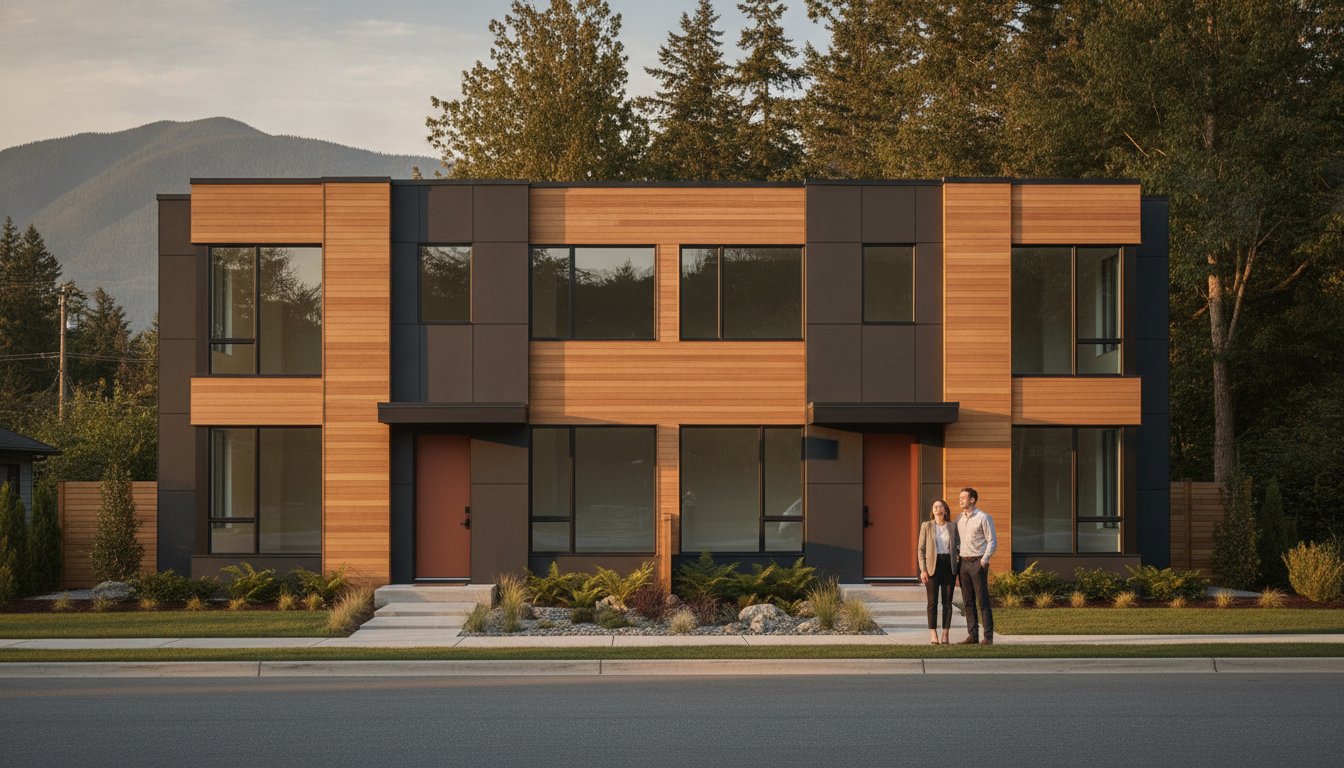
Can a standard 33-foot lot really transform into a high-yield fourplex without the process becoming a financial black hole? You aren't alone in feeling buried by the complexity of Vancouver's R1-1 zoning and the shifting requirements of Bill 44. The anxiety is real, especially when regional DCCs have climbed to C$29,197 per unit and municipal levies seem to change by the month. You deserve a clear, transparent breakdown of the actual cost to build a multiplex in Vancouver so you can move forward with confidence instead of guesswork.
We've built this 2026 reference guide to replace confusion with a structured, professional roadmap. You will learn how to navigate current market trends and manage the soft costs that often catch property owners off guard. We'll compare the long-term value of multiplexes against traditional laneway houses and reveal how a unified design-build strategy can significantly shorten your permit timeline. It's time to stop wondering if your property can do more and start realizing its full potential through a disciplined, expert-led framework.
Key Takeaways
- Master the R1-1 zoning framework to transform a standard lot into a high-density asset with up to eight residential units.
- Identify the true cost to build a multiplex in Vancouver by distinguishing between physical construction expenses and critical soft costs like engineering.
- Anticipate municipal fees by budgeting for specific Development Cost Levies and regional infrastructure charges before you break ground.
- Compare the rental yield and strata potential of a multiplex against a traditional laneway house to maximize your long-term return on investment.
- Learn how a unified design-build approach eliminates fragmented communication and protects your project from common schedule delays and budget overruns.
What is the Real Cost to Build a Multiplex in Vancouver in 2026?
Most homeowners start with a basic construction estimate and end up blindsided by the final numbers. The cost to build a multiplex in Vancouver is far more than just the "sticker price" of wood and concrete. In 2026, the financial math for residential development has fundamentally shifted. You aren't just building a larger house; you're developing a sophisticated multi-unit asset. This requires a holistic view of land value, municipal levies, and design efficiencies that didn't exist three years ago.
Why is 2026 the pivotal year? We've reached a point where provincial mandates and municipal bylaws have finally aligned. The result is a predictable, albeit complex, landscape for density. Understanding the total project budget means accounting for everything from site surveys to the final occupancy permit. If you fail to account for the "soft costs" and municipal fees, your project's viability could evaporate before you even break ground. You need a strategist, not just a builder, to ensure your budget remains a tool for success rather than a source of stress.
The R1-1 Zoning Revolution
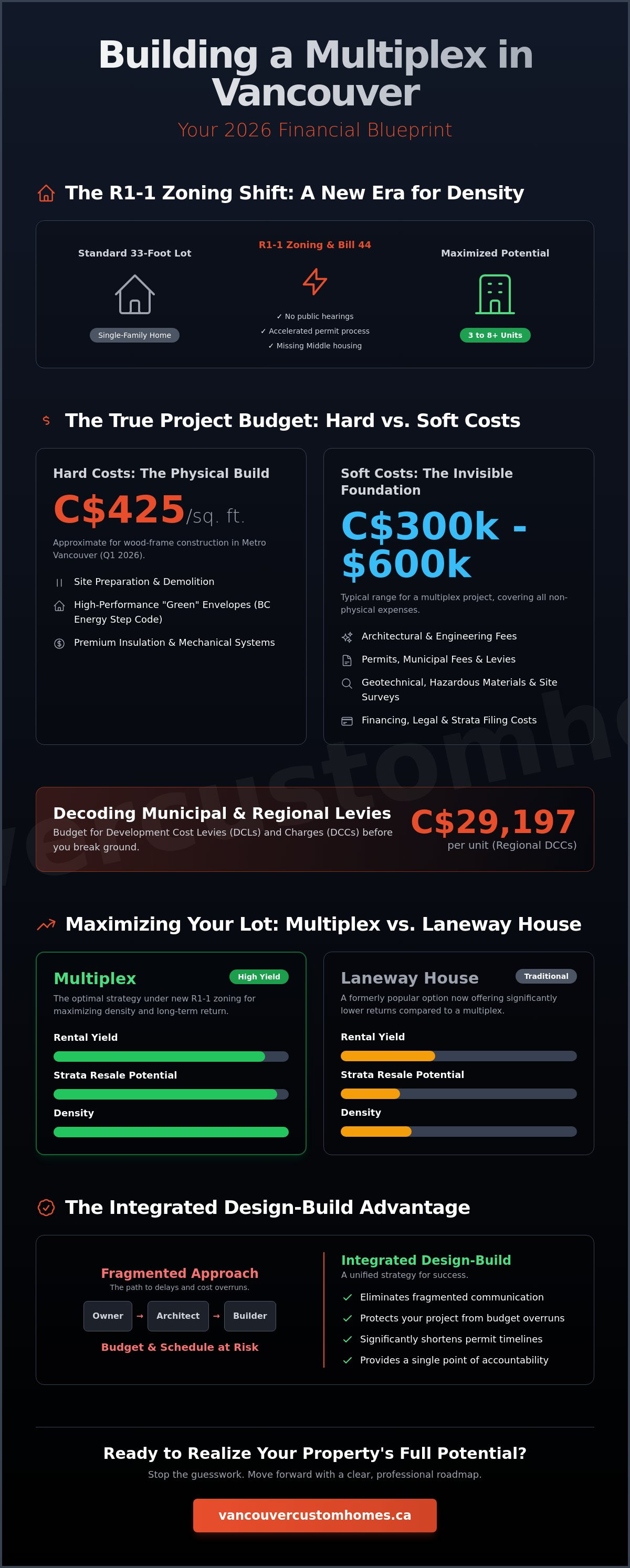
Vancouver has consolidated its traditional RS zones into the R1-1 category. This is a deliberate move toward Missing Middle Housing, designed to bridge the gap between single-family homes and high-rise towers. Provincial Bill 44 has streamlined this process by removing the requirement for public hearings on most multiplex projects. This change alone saves months of costly delays and political uncertainty. If your property is located within a Transit-Oriented Area (TOA), the density requirements and budget considerations change again. You can now fit 3 to 8 units on a single lot; however, higher density often triggers additional requirements for infrastructure and utility upgrades that must be factored into your early estimates.
Understanding Your Investment: Stratified vs. Rental
Your exit strategy dictates your initial design and financial focus. Stratifying units for individual resale involves higher legal fees and specific survey requirements. It offers a faster return on investment through high gross sales revenue. Conversely, the City of Vancouver offers specific fee waivers and DCL reductions for purpose-built rental multiplexes. These incentives can lower the upfront cost to build a multiplex in Vancouver for those looking to generate long-term monthly income. You must decide early if you're building for a quick sale or a generational rental portfolio, as the municipal path for each is distinct. A unified design-build approach ensures your choice is reflected in every architectural detail and permit application.
Breaking Down Construction Expenses: Hard Costs vs. Soft Costs
Building a high-density project on a standard Vancouver lot leaves no room for error. This is why the cost to build a multiplex in Vancouver must be calculated through an integrated lens. You need to distinguish between hard costs, which cover the physical structure, and soft costs, which represent the intellectual and regulatory foundation of the project. In the current market, failing to account for either category with precision can lead to a project that is stalled before the first shovel hits the dirt.
Site preparation and demolition represent your first major capital outlay. Clearing an existing single-family home to make way for a 3 to 8 unit multiplex requires specialized hazardous material surveys and controlled disposal. These initial steps are the price of admission for densifying your property and must be managed with a disciplined timeline to avoid carrying costs on your construction financing.
Hard Costs: The Reality of Building in 2026
Hard construction costs in Metro Vancouver have reached approximately C$425 per square foot for wood-frame residential builds as of Q1 2026. This figure isn't just a result of inflation; it's a reflection of higher building standards. The BC Energy Step Code now mandates Step 4 or 5 for many new developments, requiring high-performance "green" envelopes and sophisticated mechanical systems. Industry leaders like Advanced Roofing emphasize that the roof is a primary element of this envelope, necessitating durable materials that can withstand the coastal climate. These requirements ensure a superior final product but demand a larger upfront investment in premium insulation, airtightness testing, and heat recovery ventilators. Integrated builders mitigate these expenses by securing material procurement early, protecting your budget from the volatile price swings that often plague fragmented construction teams.
Soft Costs: The Blueprint for Success
Soft costs typically range from C$300,000 to C$600,000 for a four-unit multiplex. This category includes architectural fees, structural engineering, and civil engineering for complex R1-1 lots. These aren't optional extras; they are the non-negotiable requirements for securing your building permit. A professional site survey is your most critical first step to realize the lot's potential, as even a few centimetres of discrepancy can alter your unit count or floor area ratio.
You must also budget for municipal fees, specifically Development Cost Levies (DCLs), which the city uses to fund infrastructure. These fees can reach C$15,000 to C$25,000 per unit, making them a significant portion of your total cost to build a multiplex in Vancouver. If you want to see how these complex requirements translate into a physical space, exploring a custom home design with 3D visualization can help you verify the feasibility of your vision before you commit to the full build. This proactive approach replaces typical construction anxiety with a sense of controlled, predictable excitement.
Navigating Municipal Fees: DCLs, DCCs, and Density Bonuses
Hidden municipal levies are often the primary source of anxiety for Vancouver property owners. You might have a firm grasp on your lumber and labour budget, but the city's fee structure can add hundreds of thousands of dollars to your project if you aren't prepared. Understanding these charges is essential to calculating the true cost to build a multiplex in Vancouver. These aren't arbitrary taxes; they are structured payments designed to fund the very infrastructure that makes increased density possible.
The financial landscape for 2026 includes specific incentives that you should leverage. For instance, the city currently offers a 20% reduction on certain levies for eligible projects. This reduction was approved in late 2025 to encourage the "Missing Middle" housing movement. Missing these windows of opportunity can be the difference between a project that pencils out and one that stalls. You need a clear-eyed view of three specific pillars: DCLs, DCCs, and density bonuses.
The Three Pillars of Vancouver City Fees
Your first major obligation involves City of Vancouver's Development Cost Levies. These are split into two categories: City-wide DCLs and Utilities DCLs. As of 2026, the City-wide rate sits at C$49.88 per square metre, while the Utilities portion adds another C$39.06 per square metre. These rates reflect the recent 20% reduction intended to spur development. Beyond city limits, you must budget for Metro Vancouver Development Cost Charges (DCCs). These regional fees fund water and sewer infrastructure and have risen to C$29,197 per unit for 2026. Finally, your permit fees, which include both the initial Development Permit and the final Building Permit, typically range between C$15,000 and C$30,000 for a standard multiplex build.
Strategic Fee Mitigation
Can you reduce these costs? Yes, if you understand the zoning nuances. If you're building on a standard 33-foot lot, you are exempt from the density bonus fees that apply to larger 50-foot lots. For those larger properties, the density bonus can reach C$1,506.95 per square metre for the additional floor area. Choosing to build a rental-only multiplex can also trigger significant DCL waivers, as the city prioritizes long-term housing over immediate strata sales. Including a below-market unit in a 6-plex configuration can further unlock exemptions. These strategic choices directly impact the cost to build a multiplex in Vancouver and should be decided during the design phase to maximize your property's value. We help you navigate these trade-offs to ensure every dollar spent on fees serves your ultimate investment goal.
Multiplex vs. Laneway House: Which Strategy Maximizes Your Lot?
Deciding between a laneway house and a full-scale multiplex isn't just a financial choice; it's a strategic pivot for your property's future. A laneway house adds a secondary dwelling to your existing lot. A multiplex, by contrast, replaces the single-family model with a high-density asset. While the cost to build a multiplex in Vancouver is undeniably higher than a laneway project, the potential for four rental incomes instead of two fundamentally changes the financial math for most homeowners.
Multigenerational living is the hidden advantage of the multiplex strategy. Many Vancouver families now use the R1-1 zoning to create independent living spaces for adult children or aging parents on the same lot. This "Missing Middle" strategy allows you to keep your family close while providing everyone with their own front door and private kitchen. It solves the housing crisis at a personal level, creating a family compound that is both functional and financially sound. You are essentially creating a small community that provides security for your loved ones while building massive equity.
The Case for the Laneway House
For homeowners who are emotionally attached to their current residence, a laneway house offers a path to income without the need for demolition. It requires a lower initial investment and preserves a portion of your backyard privacy. This is often the best choice for those seeking a "gentle" densification that supplements their lifestyle rather than overhauling it. If you prefer to keep your main home intact, our guide on Laneway Home Builders Vancouver: The 2026 Integrated Building Guide provides a detailed breakdown of that specific process and how it integrates with your existing property.
The Case for the Multiplex
If your primary objective is to maximize every square centimetre of your land, the multiplex is the superior strategy. You can typically push the Floor Space Ratio (FSR) to 1.0, which is a massive increase over traditional single-family allowances. This isn't just about size; it's about liquidity. Stratified units allow you to sell individual homes separately. This strategy can fund your retirement or provide the necessary capital for your next investment venture. In high-demand neighbourhoods like Kitsilano or Mount Pleasant, a stratified multiplex is a future-proof asset that attracts a broad range of buyers who are priced out of detached homes.
The cost to build a multiplex in Vancouver is an investment in a versatile, high-yield property that adapts to your changing needs over the next several decades. Whether you want to house three generations of family or create a lucrative rental portfolio, we provide the architectural expertise to make it happen. You can start your multiplex design journey today to see exactly how these units will fit on your specific lot through our advanced visualization tools.
The Integrated Design-Build Advantage: Controlling Costs from Start to Finish
Why do so many Vancouver developments exceed their initial budgets? The answer usually lies in the fragmented model where the architect and the builder work in silos. This lack of unity creates a communication gap that often results in expensive change orders and schedule delays. When you choose a unified design-build approach, you keep every expert under one roof. This integration is the most effective way to stabilize the cost to build a multiplex in Vancouver, ensuring that the vision created on paper is actually achievable on the construction site.
A "One-Roof" solution provides you with a single point of accountability. You don't have to mediate between a designer who wants aesthetic perfection and a builder who is focused on the bottom line. Instead, you benefit from a lead strategist who manages the entire lifecycle of the project. This discipline replaces the typical chaos of construction with a structured, enjoyable experience. By aligning the design with the physical build from day one, we eliminate the friction that usually leads to financial surprises.
Eliminating the Visualization Gap
Visualizing how four or six units fit onto a standard city lot is a significant challenge for most property owners. We solve this through immersive 3D VR walkthroughs. You can virtually walk through your multiplex design before a single nail is driven into wood. This technology allows us to refine layouts and ensure every unit feels spacious and centred. It's a proactive way to prevent the expensive change orders that often inflate the cost to build a multiplex in Vancouver. To learn more about how we connect these stages, read our guide on Custom Home Design Vancouver: Bridging the Gap Between Vision and Build.
Decisive Project Management
Transparency shouldn't be a luxury in construction. It's a requirement for peace of mind. We provide real-time tracking of every milestone and budget item through our dedicated project management portal. You can monitor the progress of your multi-unit development from your phone, ensuring full accountability across all trades. This level of oversight is essential when managing the complexities of R1-1 zoning and high-density builds. For a comprehensive look at how we manage these logistics, explore our article on how to Build a Multiplex in Vancouver: The 2026 Guide to Integrated Design and Construction. Our goal is to transform a complex regulatory journey into a predictable, high-value investment.
Secure Your Investment Strategy for 2026
Navigating the R1-1 zoning landscape requires more than just an architect; it demands a strategist who understands the intersection of provincial legislation and municipal fees. You've seen how the cost to build a multiplex in Vancouver is shaped by everything from BC Energy Step Code requirements to regional DCCs. By choosing an integrated design-build model, you replace fragmented uncertainty with a disciplined, unified process that protects your equity from start to finish. This approach ensures that your transition from a single-family lot to a high-yield residential asset is both logical and profitable.
Our team specializes in R1-1 zoning and Provincial Bill 44 compliance, ensuring your project moves through the city's systems without unnecessary friction. Every project includes immersive 3D VR Walkthroughs to eliminate the visualization gap and 24/7 access to our Transparent Project Management Portal. You deserve a partner who values your time and emotional well-being as much as the physical structure. Book a Multiplex Feasibility Consultation with Vancouver Custom Homes today to begin realizing your property's full potential. Your vision is ready for a professional, predictable realization.
Frequently Asked Questions
How many units can I build on a standard 33-foot lot in Vancouver?
You can build up to 4 units on a standard 33-foot lot under the current R1-1 zoning rules. Larger lots, such as those with 50 feet of frontage or more, can accommodate up to 8 units depending on the specific site conditions. This density allows you to maximize your property's footprint while providing independent living spaces for families or tenants.
What is the difference between R1-1 zoning and the old RS zoning?
R1-1 zoning is the new consolidated residential category that replaces the old RS single-family zones. While RS zoning restricted density to a main house and a suite or laneway, R1-1 permits "Missing Middle" housing by default. This change removes the need for lengthy rezoning applications and public hearings, allowing for a faster transition to multi-unit development.
Do I need to provide parking for every unit in a multiplex under the new rules?
No, you aren't required to provide off-street parking for every unit in a multiplex under the latest regulations. The city has shifted focus toward transit-oriented development, which means parking requirements are often waived or reduced. This allows for more livable floor space and lower construction costs, though you should still consider the needs of future residents.
Can I sell the individual units in my multiplex separately?
Yes, you can sell units individually if you choose to stratify the building. Stratification turns the multiplex into separate legal entities, similar to a condo or townhouse. This is a popular exit strategy for homeowners looking to fund retirement or recoup their initial investment quickly. Rental-only projects are also an option and come with specific municipal fee incentives.
How much does it cost to build a multiplex in Vancouver in 2026?
The total cost to build a multiplex in Vancouver in 2026 depends on several variables, including unit count, finishes, and the specific site topography. You must budget for hard construction costs, professional soft costs, and significant municipal levies like DCLs and DCCs. We provide detailed feasibility studies to ensure your project aligns with your financial goals from the very beginning. It is also wise to budget for long-term property maintenance to keep the building in peak condition; for professional exterior services, you can consult jbmcustomcontracting.com.
How long does the permit process take for a multiplex application?
Permit review timelines for a multiplex application currently range from 4 to 6 months. This is a significant improvement over previous years, thanks to the streamlined R1-1 framework. However, you should account for an overall project timeline of 18 to 24 months from the initial design phase to final occupancy and move-in.
Does a multiplex require the existing home to be demolished?
Yes, building a multiplex typically requires the demolition of the existing single-family residence. Because the new structure utilizes a much larger portion of the lot's floor space ratio, it isn't possible to keep the original home. We manage the entire demolition process, including hazardous material surveys and site clearing, as part of our integrated build strategy.
What are the energy efficiency requirements for new Vancouver multiplexes?
New multiplexes must comply with the BC Energy Step Code, which often requires meeting Step 4 or Step 5 standards. This means your build will feature high-performance insulation, airtight envelopes, and energy-efficient mechanical systems. These requirements ensure your property is future-proofed against rising energy costs and provides superior comfort for all residents.


