

What if the first step in laneway home financing Vancouver isn’t choosing a loan, but defining what you plan to build? It’s natural to focus on borrowing capacity first. But lenders may assess the project alongside your finances, and an unclear scope, approval status or construction sequence can make it harder to prepare for that conversation.
This guide explains common financing routes, including refinancing and construction financing, and the factors a lender may consider. It’s general information, not a financing approval or a substitute for advice from a qualified lender. Your options and eligibility depend on your circumstances and the lender’s current requirements.
You’ll learn what project and financial details to gather, why municipal approvals and construction timing matter, and how to compare options without assuming you’ll qualify. A coordinated design-and-build process can also help clarify the proposed scope. Vancouver Custom Homes brings design and construction together, with 3D VR walkthroughs and project updates that help make project decisions visible before you commit.
Key Takeaways
- Compare home-equity borrowing, refinancing and construction financing as options to discuss with lenders, not as guaranteed or universal solutions.
- For laneway home financing Vancouver, prepare to discuss your financial position as well as the property and proposed project.
- Gather property details, design information, approval status and construction-stage plans so you can ask focused questions about funding.
- Confirm current product availability, lender requirements and qualifying criteria directly with providers before making financing decisions.
- A coordinated design-and-build scope and 3D VR walkthrough can help you review project decisions before finalizing your plans with a lender.
Laneway Home Financing in Vancouver: What Homeowners Need to Know First
Funding a second dwelling can feel complex before you have plans in hand or have spoken with a lender. There isn’t one standard loan for every laneway home. Laneway home financing Vancouver refers to funding arranged for a particular residential construction project. Options and requirements depend on the borrower, property, project and provider.
A laneway home project differs from buying a completed home: funds may be needed for planning, construction or both, subject to the provider’s terms. It also differs from refinancing for unrestricted purposes, because the proposed use of funds is tied to a specific build. For a general introduction to what a laneway house is, see the overview of this housing type in Canada.
Vancouver’s property context matters. The lot, existing home, site conditions, intended use, design scope and municipal approval status all help describe what’s proposed. Lenders decide what information they require and how they assess it, so confirm their current criteria directly. This article offers general education, not lending, legal, tax or financial advice.
A construction project budget is an estimate of planned work, not confirmed financing approval. Keep those documents and decisions distinct. A clearly described project can make an initial lender conversation more focused, but it can’t guarantee approval, a particular amount or specific terms.
What does financing a Vancouver laneway home involve?
Financing means arranging funds for some or all of the project, which could include planning and construction. The structure depends on the provider and the homeowner’s circumstances. Don’t assume a product designed for a home purchase or a general refinance will automatically fit a laneway build. Ask prospective lenders what funding routes they currently offer and what property and project details they need to review.
Why define the project before choosing a financing route?
Start with the essentials: how you expect to use the dwelling, what the site may allow, the design scope and the anticipated sequence of work. These details help you explain what you’re proposing instead of beginning with a guessed loan amount. City of Vancouver requirements and the project’s approval status may also be relevant, but requirements can change. Check current municipal information and ask the lender how approvals affect its review.
An early conversation can help identify missing information and useful next questions. It isn’t a lending decision. Confirm available products, eligibility criteria and required documents with the lender before committing to a financing route or construction plan.
Which Laneway Home Financing Options Could Vancouver Homeowners Explore?
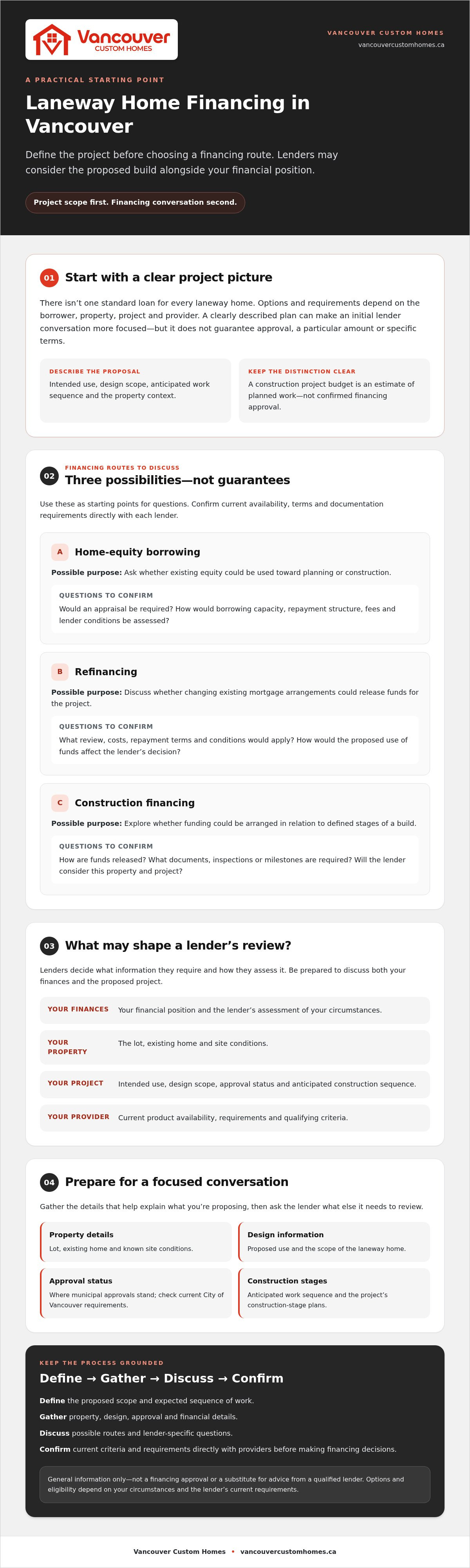
There’s no single financing route that suits every laneway-home project. Depending on your circumstances and what providers currently offer, you might ask about using home equity, refinancing or financing structured around construction. Treat these as starting points for a lender conversation, not recommendations or confirmation that you’ll qualify.
The comparison below can help you frame that conversation. Availability, terms and documentation requirements must be confirmed directly with each lender.
| Route to discuss | Possible purpose | Questions and considerations to confirm |
|---|---|---|
| Home-equity borrowing | Ask whether existing equity could be used toward planning or construction. | Would an appraisal be required? How would borrowing capacity, repayment structure, fees and lender conditions be assessed? |
| Refinancing | Discuss whether changing existing mortgage arrangements could release funds for the project. | What review, costs, repayment terms and conditions would apply? How would the proposed use of funds affect the lender’s decision? |
| Construction financing | Explore whether funding could be arranged in relation to defined stages of a build. | How are funds released? What documents, inspections or milestones are required? Will the lender consider this property and project? |
Could home equity or refinancing help fund the project?
These are options to raise with your current lender or another provider, not routes to assume will be available. Ask how the lender would assess your property and finances, whether an appraisal is needed, and what repayment structure, fees and conditions may apply. Access to equity and suitable terms depend on your circumstances and the provider’s review.
When should you ask about construction financing?
If you’re considering financing tied to the build, ask how the lender handles staged funding before committing to a schedule. Confirm what documentation is needed at each stage and whether inspections or project milestones affect fund releases. Requirements vary, so verify that the provider will consider your specific property and proposed laneway home.
A clear design and construction scope can make these questions more precise. It helps you explain the intended use, site, proposed work and anticipated sequence without treating a budget as an approved loan amount. Vancouver Custom Homes brings laneway-home design and construction together. Exploring its laneway home design and construction can help you clarify project decisions before discussing financing. That’s planning support, not financing advice or approval.
What Will a Vancouver Lender Assess for Laneway Home Financing?
A lender may look at two connected parts of your application: your financial circumstances and the property and project you’re proposing. The exact review isn’t universal. Lender decisions depend on your individual finances, property, project and the provider’s criteria. Use the questions below to prepare, then confirm directly what applies to your situation.
Which borrower and property details may lenders ask about?
Be ready to discuss your income, existing debts, credit history, assets and ability to manage repayment. Ask what documents the lender needs to understand your financial position, and whether it will assess other factors. These are preparation prompts, not qualification thresholds or a way to predict approval.
Gather current information about the property, including details of the existing home and the proposed laneway home site. Then ask whether the lender needs an appraisal or another form of valuation, what it would assess, and when that information must be provided. Don’t assume an existing property assessment will meet a lender’s requirements.
How can design, permits and construction plans affect the discussion?
Your project information helps the lender understand what the financing request relates to. Ask whether it wants any of the following:
- A written description of the proposed laneway home and its intended use
- Design drawings or other information about the proposed scope
- An anticipated construction schedule, including key stages
- Information about municipal applications, permits and approval status
These are useful topics to raise, not a universal document checklist. Lender requirements vary, and not every provider will ask for the same approvals or materials. Ask which documents it needs, whether they’re required before an initial review or later, and how changes to the design or schedule should be reported.
Vancouver planning details may also affect how you describe the project. Check current City of Vancouver requirements and confirm with the lender whether its review depends on any particular planning or approval milestone. For municipal rules themselves, refer to the separate laneway-home regulations guide and verify details against current City information.
For laneway home financing Vancouver, keep the lender conversation focused on what it will assess, not on assumptions about what it must accept. A clear account of your finances, property and proposed build gives you a more organized starting point. Only the lender can explain its criteria and make a decision on your application.
How to Prepare for a Laneway Home Financing Conversation
A focused conversation starts with organized information, not a guessed borrowing amount. For laneway home financing Vancouver, prepare in stages: your household finances, the property, the proposed build and the questions you need the lender to answer. You don’t need every detail finalized before making an initial enquiry, but knowing what’s confirmed and what’s still preliminary helps keep the discussion clear.
Build a lender-ready project information checklist
Bring together current property details, the intended use of the laneway home, preliminary design information and what you know about application or approval status. Ask the lender which documents it needs and when. Requirements vary, so confirm what must be in place before you make commitments or start work.
- Personal finances: List the records the lender requests about income, debts, assets and existing borrowing.
- Property and project: Note the site details, proposed scope, design status and anticipated construction sequence.
- Lender questions: Ask about required documents, funding or draw schedules, fees, conditions and timing.
- Decision points: Confirm what must be approved or documented before signing contracts or beginning construction.
Keep a record of the answers, including any conditions that depend on later documents or project milestones. If something is not yet known, mark it as outstanding rather than treating an early estimate as final.
Compare financing discussions without guessing at affordability
Once you have information from providers, compare their written terms side by side. Review repayment structure, timing, conditions, fees and flexibility. Ask for clarification on anything that is unclear, and consider independent advice from a qualified financial professional to understand how repayment could fit your household cash flow and contingency needs.
For budgeting, separate broad project categories such as design, approvals, site work and construction. The laneway-home cost guide can help you understand which categories to account for. Use project-specific information rather than treating general figures as your final budget. An early estimate is not a lender commitment, and it may not reflect the completed construction scope.
A defined design and build scope can make the lender conversation more concrete by showing what the project includes and how decisions may progress. If you’re still shaping those details, discuss your laneway-home design and build scope with Vancouver Custom Homes. The team’s design and construction process can help clarify the project, while financing terms and approval remain decisions for your lender.
Connect Financing Readiness With a Well-Planned Vancouver Laneway Build
Financing discussions are easier to organize when the project itself is clearly described. Coordinated design and construction can bring lot requirements, design choices and construction planning into one project scope. That gives you a more coherent brief to discuss with a lender, while leaving financing decisions with the provider.
How coordinated design and construction can clarify project scope
Design decisions affect what’s being proposed for the property. A 3D VR walkthrough lets you review the intended layout and design before construction begins, so you can identify questions or changes while plans are still being developed. It’s a design-review tool, not evidence of lender approval, municipal approval or guaranteed costs.
For laneway home financing Vancouver, that distinction matters. A defined scope can help you explain what you intend to build and how the project is planned, but a lender independently assesses your finances, property and submitted information. A walkthrough or construction plan can support the conversation; neither determines its outcome.
Vancouver Custom Homes brings laneway-home design and construction together. Its project-management portal provides access to project progress and milestone updates, helping clients follow how the work advances. Ask what project information will be available to you and whether it may be useful for your own records or lender discussions.
What to discuss with a laneway home builder before moving forward
Ask how design decisions, construction planning, milestones and client updates are coordinated. Clarify what project information will be available as the scope develops, and which details remain subject to municipal review or lender assessment. For a broader view of the design-and-build process, consult the laneway home builder guide and verify planning details with current City of Vancouver information.
Before committing to construction, confirm financing terms, conditions and required documentation directly with your lender. A builder can clarify the proposed design and construction scope, but cannot determine whether your application will be approved or what terms a provider may offer.
If you’re still defining what to build, you can discuss your laneway-home design and construction scope with Vancouver Custom Homes’ laneway home team. It’s a practical next conversation about the project itself, with no assumption that financing has been arranged.
Take the Next Step With a Clearer Project Plan
Choosing a path for laneway home financing Vancouver starts with understanding what you plan to build and preparing the right questions for lenders. Home equity, refinancing and construction financing are possibilities to discuss, not guarantees of approval. A lender will assess your circumstances, the property and the proposed project under its own criteria.
A clearly defined design and construction scope can make those conversations more focused. Vancouver Custom Homes offers in-house design tailored to lot requirements and client preferences, 3D VR walkthroughs to review the proposed design before construction, and a project-management portal for progress and milestone updates. These tools support project planning and transparency, not lender approval or financing advice.
Vancouver Custom Homes works on residential projects across Metro Vancouver, including Vancouver, Burnaby, West Vancouver, North Vancouver, Richmond, New Westminster, Coquitlam, Port Moody, Port Coquitlam, Maple Ridge, Pitt Meadows, Langley, Surrey and Delta. If you’re ready to shape your laneway-home plans, discuss your Vancouver laneway home plans with Vancouver Custom Homes. Clarify the proposed build scope, then confirm financing options and terms directly with a lender.
Frequently Asked Questions
Can I use a mortgage to finance a laneway home in Vancouver?
Possibly, but the suitable mortgage structure depends on your circumstances, property, project and lender. Ask your current lender whether refinancing or another mortgage option could apply, and whether it offers financing for construction. For laneway home financing Vancouver, clarify how the proposed build and its approval status would be reviewed. A discussion can help identify requirements, but only the lender can confirm availability, terms and approval.
What financing options are available for a laneway home?
Options to discuss with lenders may include borrowing against home equity, refinancing an existing mortgage, or financing arranged around construction. These are broad categories, not products every homeowner can access. Ask each provider what it currently offers for a laneway-home project, what information it needs, and how repayment and fund release work. Compare written terms, conditions and fees before deciding, and consider qualified independent advice.
Do I need a permit before applying for laneway home financing in Vancouver?
Not necessarily, but there’s no universal answer for every lender or financing route. A provider may ask about the project’s application or approval status at a particular stage. Confirm its documentation requirements directly, and check current laneway-home requirements with the City of Vancouver before relying on assumptions. If your property is elsewhere in Metro Vancouver, verify requirements with the municipality responsible for that location.
How much can I borrow to build a laneway home?
There isn’t a reliable amount to estimate without a lender’s review of your finances, property and proposed project. A lender may ask about income, existing debts, assets, repayment capacity, property information and project documentation, but its criteria and decision are provider-specific. Request an assessment directly and avoid treating a preliminary project estimate or informal conversation as a confirmed borrowing amount or financing commitment.
Can I use a HELOC to build a laneway home?
A home equity line of credit, or HELOC, may be worth discussing with a lender as one possible way to access funds, but availability and terms depend on its review of your circumstances and property. Ask how borrowing capacity is assessed, what repayment structure and fees apply, and whether the lender will consider the intended construction use. Don’t assume existing equity automatically means a HELOC will be approved or suit your project.
What documents should I prepare for a laneway home financing application?
Ask the lender for its own checklist, since requirements vary. You may want to organize information about income, debts, assets and existing borrowing, along with current property details. For the project, ask whether it needs a written description, preliminary drawings, an anticipated construction schedule, or details about municipal applications and approvals. Confirm which documents are needed now and which may be required before funding or construction milestones.
Should I speak with a builder or lender first about a laneway home?
You can speak with both as you develop the project. A builder can help clarify design intent, lot-related considerations and the proposed construction scope; a lender explains its financing options, assessment criteria and required documents. Vancouver Custom Homes designs and builds laneway homes in Metro Vancouver, including Vancouver, Burnaby, Richmond and Surrey. Keep the roles clear: confirm financing terms with a lender before making commitments or starting work.


