
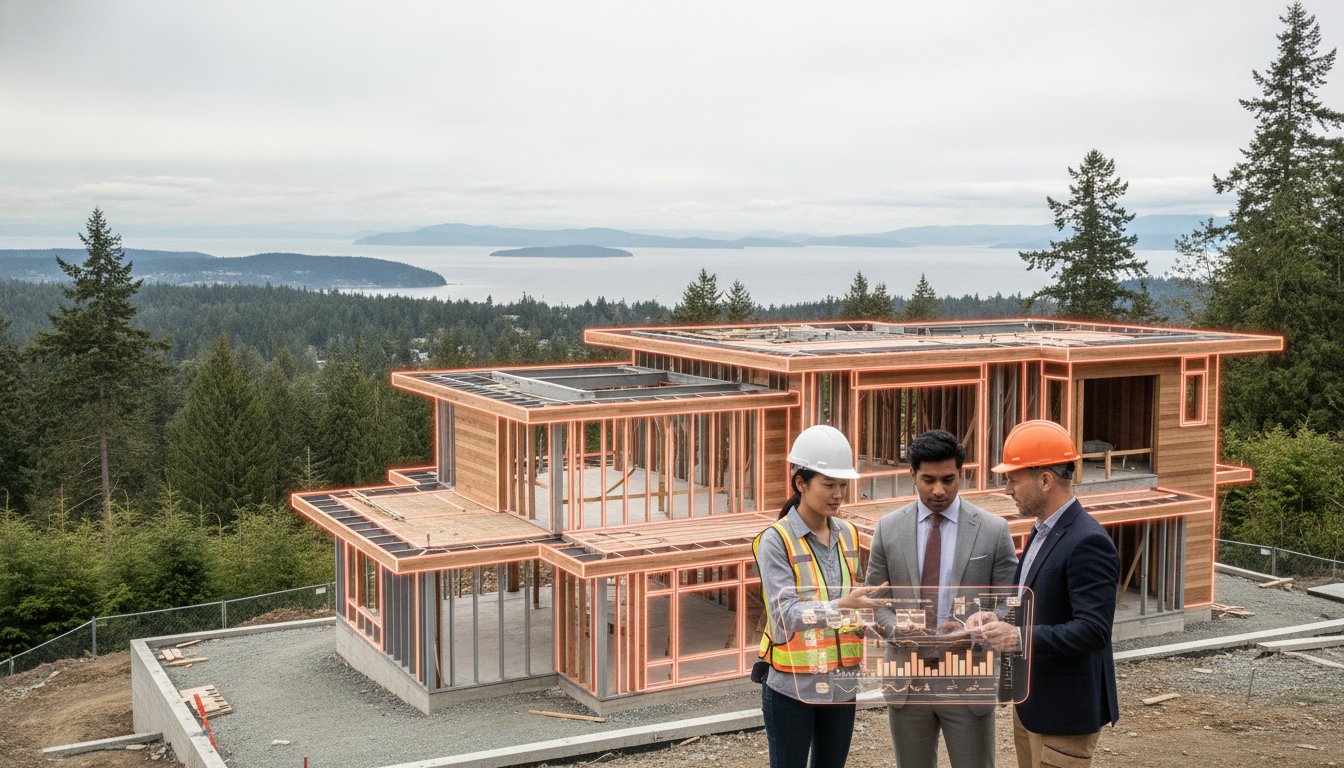
Why would you prioritize a razor-thin interest rate if a lender's rigid draw schedule risks a total site shutdown? In the current market, the most affordable capital is the money that actually arrives when your builder needs it. Securing the right financing a custom home build Vancouver requires more than just a high credit score. It demands a partner who understands the 4.5% increase in 2026 permit fees and the nuances of the latest multiplex zoning rules. You don't want a lender who relies on outdated appraisal models; you want one who recognizes the value of your luxury finishes and respects your builder's specific timeline.
We know that the gap between a visionary design and a completed home is often filled with unnecessary financial friction. This guide ensures you master the complexities of local construction financing and identify the lenders that truly align with your project. You'll learn how to maintain a seamless flow of capital during the build, capitalize on the stable 4.45% prime rate, and secure high loan-to-value ratios based on future appraised values. We're breaking down the exact criteria you need to move from initial site prep to a finished masterpiece without the typical banking headaches.
Key Takeaways
- Understand how "Future Value" appraisals allow you to borrow against the completed worth of your project rather than just the current land value.
- Compare the institutional stability of the Big Five banks against the localized zoning expertise of credit unions for financing a custom home build vancouver.
- Master the 5-stage progress draw cycle to ensure a steady flow of capital and prevent administrative delays from halting your construction site.
- Learn how an integrated design-build approach and 3D VR walkthroughs provide the transparency lenders require to approve luxury specifications.
Navigating Construction Loan Lenders in Vancouver’s 2026 Market
Traditional mortgages are designed for finished assets. Construction loans, however, are designed for potential. In British Columbia, the distinction is critical. When you are financing a custom home build vancouver, you are not just securing a loan; you are managing a series of Unfunded Loan Commitments. The lender agrees to a total loan amount based on the "Future Value" of your architectural plans, but they only release capital as specific construction milestones are met. This structure protects the bank’s equity but creates a unique cash flow challenge for the homeowner.
Why do Vancouver appraisals feel so different from the rest of Canada? Our market values land so highly that the "as-completed" value must account for premium luxury finishes and modern density to justify the loan-to-value ratio. With the 2026 multiplex housing rules now in full effect, lenders have become more analytical. They are no longer just looking at a single-family dwelling; they are evaluating the revenue potential of multiple units on a single lot. To keep your project moving, interest-only payments are the standard during the build phase. You only pay interest on the funds that have actually been drawn, which keeps your monthly carry costs manageable while your capital is tied up in concrete and framing.
The High Cost of Land: Impact on Your First Draw
Are you prepared for the land value gap? In Metro Vancouver, most lenders cap the initial land draw at 65% to 75% of the current value. If you are tearing down an existing structure in West Vancouver or Richmond, the lender may view the property strictly as a vacant lot, regardless of the house currently standing there. Your existing equity in the lot often serves as your down payment. If your land is owned clear, you can frequently leverage that equity to cover the first several stages of construction without dipping into cash reserves.
Construction-to-Permanent vs. Construction-Only Loans
Choosing the right loan structure depends on your exit strategy. A construction-to-permanent loan is the most secure path for families. It allows you to lock in long-term mortgage rates early in the build process, providing a stabilizing force against market fluctuations. With the Canada Prime Rate holding at 4.45% in mid-2026, many owners prefer this predictability. Conversely, construction-only loans are the tool of choice for investors planning to sell immediately upon completion. These often carry slightly higher variable rates but offer the flexibility to pay off the balance in full the moment the occupancy permit is issued, avoiding the complexity of a long-term mortgage conversion.
Planning for the transition to a permanent mortgage is vital; professional brokerages like Dhugga Mortgages help homeowners navigate the complexities of refinancing and long-term financing solutions to protect their equity.
Comparing Vancouver Construction Lenders: Big Banks vs. Credit Unions vs. Private
Your choice of lender dictates the pace of your project. While many borrowers chase the lowest headline rate, experienced investors know that flexibility often outweighs a few basis points. The "Big Five" Canadian banks offer institutional stability and the most competitive variable rates, currently hovering between 5.45% and 6.45%. However, their approval processes are notoriously rigid. If your project deviates from standard blueprints, you may face significant red tape. Are you prepared to wait weeks for a committee to review a minor design change? For many, the answer is a firm no.
Before committing, you must ask: What is a construction loan? Unlike a standard mortgage, it's a short-term, milestone-based instrument that requires active management. This is where local expertise becomes a tangible asset. Aligning your lender with a custom home construction Vancouver project requires finding a partner who understands the local landscape. While credit unions may charge slightly more, typically 5.95% to 7.45%, their proximity to the market allows for faster decision-making and a deeper understanding of Metro Vancouver's unique zoning challenges. Choosing the right lender ensures that financing a custom home build vancouver feels like a partnership rather than a hurdle.
Why Credit Unions Often Lead in Vancouver Custom Builds
Local credit unions excel because they aren't bound by national underwriting models that ignore Vancouver's specific density rules. They offer faster turnarounds on progress inspections in areas like North Vancouver and Burnaby, often getting inspectors to the site within days. Their flexible rental offset rules are a game-changer for those building laneway houses or legal suites. They recognize the high rental demand in the city and allow you to use more of that projected income to qualify for a larger loan. This local decision-making ensures the appraisal reflects the true neighbourhood value, not just a generic regional average.
When to Consider Private Construction Financing
Private lenders are the specialists of the industry, stepping in when traditional banks hesitate. If you need to secure a site rapidly in a competitive market, private bridge financing provides the speed institutional lenders lack. These loans are also the primary solution for complex multiplex builds or for borrowers who don't meet the strict federal stress test requirements. While rates are higher, ranging from 9% to 12%, the goal is speed and execution. The strategy here is clear: use private capital to get the project out of the ground, then refinance into a traditional mortgage once the structure is enclosed and the risk is lower. Using an integrated approach like the one at vancouvercustomhomes.ca can help provide the detailed documentation these lenders need to move quickly.
Understanding the Progress Draw Schedule: The Engine of Your Build
Why is the draw schedule so critical? It's the engine of your project. When you're financing a custom home build vancouver, you aren't handed a lump sum. Instead, capital is released in 4 to 5 distinct stages as work is verified. These typically include:
- Foundation: Releasing funds once the slab is poured and backfilled.
- Framing: Funding the structural shell, roof, and floor joists.
- Lock-up: Capital for windows, doors, and exterior cladding to make the home weather-tight.
- Completion: The final release of funds once the occupancy permit is issued.
If your builder's pace outstrips the bank's inspection schedule, you face a liquidity gap that can halt progress. This is why aligning your custom home building process with these specific lender milestones is the only way to maintain momentum. In British Columbia, the Builders Lien Act adds another layer of complexity. Lenders are legally required to maintain a 10% statutory lien holdback from each draw. These funds aren't released until 55 days after the project is substantially complete. You must have enough liquid capital to cover this 10% gap in every invoice until the project's end.
The Role of the Quantity Surveyor (QS)
Lenders don't take the builder's word for it. They hire a Quantity Surveyor to verify the exact percentage of work finished before releasing a cheque. If a QS determines the framing is only 90% complete when the builder claims 100%, the bank will prune the draw. This is the primary cause of site shutdowns. Common pitfalls occur during the transition from framing to drywall. If city rough-in inspections aren't signed off, a QS may refuse to acknowledge the stage as finished. To minimize this lag, ensure your site is "inspection ready" with all permits displayed. For multiplex developers using the Apartment Construction Loan Program, this oversight is even more rigorous, requiring precise documentation of every dollar spent.
Eliminating Draw Lag with Real-Time Reporting
The most common friction point is the information gap between the site and the bank's office. We solve this through our digital project management portal. By providing inspectors with high-resolution photo evidence and real-time logs before they even arrive, we create a transparent record that speeds up the verification process. This integrated approach reduces the time between a milestone being reached and funds hitting your account. When the lender trusts the data, they trust the timeline. This level of transparency is essential for financing a custom home build vancouver without the typical administrative headaches.

Key Criteria for Selecting a Construction Mortgage Specialist
A generalist mortgage broker is a liability when you're financing a custom home build vancouver. You need a specialist who lives and breathes Metro Vancouver’s 2026 regulatory environment. Does your contact understand the nuances of the new multiplex zoning? Can they explain why your development cost levies (DCLs) might range from C$12 to C$30 per square foot depending on your specific zone? If they can't answer these questions, they can't accurately forecast your capital requirements. You need a partner who prioritizes trade payments and understands that a three-day delay in funding can lead to a two-week delay on-site as trades move to other projects.
Your specialist must also have a sophisticated approach to appraisal. Rigid models often fail to account for the premium value of high-end custom home design Vancouver. Demand a specialist who works with appraisers who recognize architectural merit and energy-efficient upgrades. Be equally demanding regarding fee transparency. Between appraisal costs, progress inspection fees, and mortgage discharge fees, administrative costs can fluctuate significantly. A true professional provides a line-item breakdown of these expenses before you sign, ensuring your contingency fund isn't drained by bank paperwork.
Questions to Ask Your Potential Lender
Don't settle for vague promises. Ask these specific questions to vet your specialist's competence:
- Will you guarantee interest-only payments for the full 24-month build cycle?
- What is your average turnaround time from an inspection request to cash being deposited?
- How do you value a laneway home? Is it treated as a secondary suite or a separate dwelling unit?
If you're looking for a team that coordinates directly with your lender to ensure these questions are answered, contact our project strategists today.
The Soft Cost Financing Gap
Many homeowners are blindsided by the "soft cost gap." Most traditional construction loans only cover "hard costs," which include the actual lumber and labour. However, your budget must account for architectural fees, permits, and 3D VR visualization. In 2026, the City of Vancouver applied a 4.5% increase across all permit categories. When you add the required C$31.00 issuance fee and potentially 160% trade-permit surcharges, your upfront cash requirement grows significantly. Ensure your specialist knows how to structure your equity to cover these initial outlays before the first draw is ever triggered.
How Vancouver Custom Homes Streamlines the Financing Journey
Lenders are inherently conservative. They view custom construction as a collection of variables. Our integrated design-build model transforms those variables into a singular, controlled workflow. By managing the entire process under one roof, we eliminate the communication gaps that typically lead to budget overruns. This structure provides a stabilizing force that reassures lenders. Whether you are working with custom home builders Richmond BC or specialists across the Lower Mainland, having a unified team is the most effective way to lower the perceived risk of financing a custom home build vancouver. We take full responsibility for every detail, replacing the typical anxiety of a large-scale project with a sense of controlled, predictable excitement.
The same principles of professional management and transparency apply to commercial projects as well; for those interested in expert renovation services in the Greater Toronto Area, you can discover Octopus Renovation Group.
Transparency is the currency of the lending world. We provide a bridge between your vision and the bank's requirements. By integrating digital project management and immersive visualization into the earliest stages, we remove the ambiguity that often causes funding delays. When the lender can see exactly where their capital is going, and how it translates into physical value, the entire process moves faster. This integrated approach ensures that your project isn't just a set of blueprints, but a well-oiled financial machine designed for success.
Visualizing Success Before the First Draw
How can an appraiser value what they cannot see? Traditional blueprints are often insufficient for capturing the value of luxury specifications. We bridge this gap using 3D VR walkthroughs. This technology allows us to provide banks with a "Digital Twin" of the project before the first shovel hits the ground. It offers a finished view that justifies higher valuations based on the actual quality of the materials. By realizing the design in a virtual space, we ensure the vision remains within the lender's budget constraints. Immersive design prevents costly mid-build change orders that could otherwise trigger a re-appraisal or a funding freeze. It gives the bank the certainty they need to approve higher loan-to-value ratios.
The Accountability Advantage
Our home builder client portal tracks every milestone with surgical precision. This isn't just a convenience for you; it's a tool for your lender. When a bank inspector sees a project with organized digital documentation, photo evidence, and real-time logs, you become a "gold star" borrower. This level of accountability reduces friction and ensures that your capital continues to flow without interruption. It eliminates the "draw lag" that halts progress on less organized sites. Don't let administrative chaos derail your vision. Start your transparent building journey with Vancouver Custom Homes and experience a process as refined as your future home.
Securing Your Future in the Vancouver Market
The landscape of 2026 demands a strategic approach to capital. You've seen that the most effective lender isn't always the one with the lowest rate; it's the partner who understands Vancouver's multiplex density and respects your builder's timeline. Success in financing a custom home build vancouver depends on eliminating the information gap between your site and your bank. By mastering the draw schedule and selecting a specialist who values luxury finishes, you protect your project from the delays that stall less-prepared builds.
We provide the stabilizing force your project needs through immersive 3D VR walkthroughs and real-time project management portal access. Our expertise in Metro Vancouver's evolving regulations ensures that your vision is realized within a framework of total financial transparency. You deserve a building experience that replaces typical industry chaos with controlled, predictable excitement. Build with Transparency: Book a Consultation. Let's turn your architectural vision into a stabilized, high-value reality.
Frequently Asked Questions
How do construction loans work in Vancouver?
Construction loans operate as milestone-based financing where funds are released in stages rather than a lump sum. You only pay interest on the capital you've actually drawn during the build phase. Each release of funds is triggered by a site inspection that verifies the percentage of work completed according to your architectural plans.
What are the current construction mortgage rates in BC for 2026?
As of July 2026, major Canadian banks offer variable construction rates between 5.45% and 6.45%. Local credit unions typically range from 5.95% to 7.45% to account for their increased flexibility. If your project qualifies for the BC Builds program, you may access interim construction financing at a subsidized rate of 2.75%.
Can I get a construction loan for a laneway house in Vancouver?
Yes, most local credit unions and several major banks provide specific financing for laneway homes. These lenders often allow you to use projected rental income to help meet debt-servicing ratios. This flexibility is a key advantage when financing a custom home build vancouver that includes secondary rental units.
Do I need a down payment for a construction loan if I already own the land?
Your existing land equity typically serves as your down payment. Lenders generally require a 20% to 35% equity contribution for the total project value. If your lot is owned clear or has significant equity, you can often leverage that value to cover the entire initial cash requirement for the build.
How long does it take to get a construction loan approved in Vancouver?
Expect the approval process to take between 4 and 8 weeks. This timeline depends on the complexity of your "as-completed" appraisal and the speed of your chosen lender's underwriting department. Providing a complete package of permits and architectural drawings at the outset is the most effective way to prevent administrative delays.
What is a progress draw and how many will I get?
A progress draw is a scheduled release of capital released as you hit specific construction milestones. Most Vancouver lenders utilize a 4-draw or 5-draw cycle. These typically occur after the foundation is poured, the framing is complete, the exterior is at "lock-up," and finally, when the occupancy permit is issued.
Can I act as my own owner-builder with a construction loan?
Most institutional lenders require you to hire a licensed general contractor with a proven track record. Lenders view owner-builders as high-risk and often refuse to provide financing a custom home build vancouver without a professional lead strategist. Partnering with an established firm provides the accountability that banks demand for luxury projects.
What happens if the construction costs exceed the loan amount?
You are responsible for any costs that surpass the original loan commitment. Lenders mandate a contingency fund, usually 10% to 15% of the total budget, to absorb these fluctuations. If costs exceed this buffer, you'll need to contribute additional personal equity before the bank releases the next scheduled draw.


