

What if the biggest threat to your 2-5-10 home warranty BC coverage isn’t a hidden defect, but a maintenance task you didn’t know to do? Warranty protection is a partnership: your builder is responsible for the home’s construction, while regular care helps protect it from preventable damage.
It’s understandable to feel unsure about what the 2-, 5- and 10-year milestones cover, or which upkeep tasks matter most. The warranty generally covers labour and materials during the first two years, building-envelope defects for five years, and specified structural defects for 10 years. But it doesn’t cover normal wear and tear or damage caused by homeowner neglect. There isn’t one universal task list for every home, so follow your warranty documents and maintenance manual, and keep records of the work you complete.
This guide turns those requirements into a checklist for each warranty stage, with seasonal reminders to help you care for your home’s exterior, major systems and structure. You’ll also learn what to document and when to raise a concern, so you can stay organized throughout the warranty period.
Key Takeaways
- Understand how the 2-, 5- and 10-year stages of a 2-5-10 home warranty BC apply to different types of defects.
- Use a practical first-two-years checklist to track changes in interior finishes and know what to document.
- Build simple seasonal habits, such as checking gutters and downspouts, to help protect the building envelope.
- Learn which foundation changes may warrant closer attention and why recording what you observe matters.
- Keep warranty documents, maintenance manuals and task records together to make long-term upkeep easier.
Understanding the 2-5-10 Home Warranty BC Framework
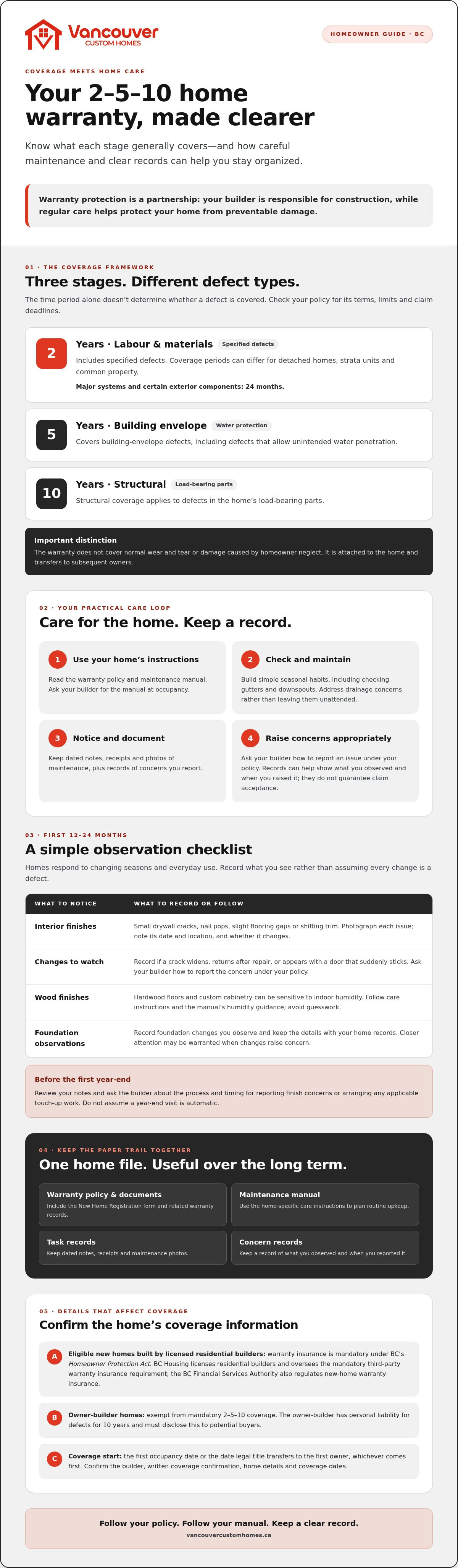
For eligible new homes built by licensed residential builders, warranty insurance is mandatory under BC’s Homeowner Protection Act. The 2-5-10 home warranty BC framework describes three coverage periods, but it doesn’t mean every defect is covered for the full 10 years. The warranty is attached to the home, transfers to subsequent owners, and has claim deadlines within each applicable period.
In brief, coverage is divided into:
- 2 years: Labour and materials coverage includes specified defects, with different periods for detached homes, strata units and common property. Major systems and certain exterior components have coverage for 24 months.
- 5 years: Building-envelope coverage applies to defects, including those that allow unintended water penetration.
- 10 years: Structural coverage applies to defects in the home’s load-bearing parts.
The 2-5-10 warranty is considered the strongest mandatory new-home warranty in Canada. It is also one example of consumer protection principles in practice: a legal safeguard for eligible homebuyers, with defined coverage and limits.
Why Maintenance Matters to Warranty Coverage
There isn’t a single maintenance checklist that overrides your warranty policy. Read its terms and follow the care instructions for your specific home. Neglect-related damage and normal wear and tear are excluded, so leaving a drainage issue unaddressed, for example, could complicate a claim if water damage follows. Ask your builder for the home’s maintenance manual at occupancy, then use it to plan routine care.
Keep dated notes, receipts and photos of completed maintenance, along with records of concerns you report. These records won’t guarantee a claim will be accepted, but they can help show how you cared for the home and when you raised an issue, including one that may relate to structural coverage.
The Role of BC Housing and Licensed Builders
BC Housing licenses residential builders and oversees the requirement for mandatory third-party warranty insurance. The BC Financial Services Authority also regulates new-home warranty insurance. An owner-builder is different: owner-built homes are exempt from mandatory 2-5-10 coverage, and the owner-builder has personal liability for defects for 10 years and must disclose this to potential buyers.
Before occupancy, confirm who built the home and ask for written confirmation of its warranty coverage. Keep any New Home Registration form and related warranty documents with your records, and check that the home’s details and coverage dates are clear. The coverage period begins on the first occupancy date or the date legal title transfers to the first owner, whichever comes first.
For buyers planning a new build, an integrated approach to custom home construction Vancouver can help coordinate design, construction information and handover documents from the start. Confirm what maintenance guidance and warranty records you’ll receive, then keep them accessible for the life of the home.
The 2-Year Labour and Materials Maintenance Checklist
The first 12 to 24 months are a useful time to learn how your home responds to changing seasons and everyday use. Materials can shift as indoor conditions change, so note what you see rather than assuming every change is a defect. Your warranty policy and maintenance manual are the guide: coverage depends on the issue and the terms, not simply on when you notice it. For a plain-language overview, consult BC's 2-5-10 home warranty insurance information from BC Housing.
Interior Finishes and Settlement
During the first heating season, you may notice small drywall cracks, nail pops, slight flooring gaps or trim that shifts. These can occur as materials respond to seasonal changes, but monitor them. Photograph each issue, note the date and location, and record whether it changes. If a crack widens, returns after repair or appears alongside a door that suddenly sticks, document those details and ask your builder how to report the concern under your policy.
Hardwood floors and custom cabinetry can be sensitive to indoor humidity. Follow the care instructions for your finishes and any humidity guidance in the maintenance manual. Avoid making adjustments based on guesswork. Before the first year-end, review your notes and ask the builder about the appropriate process and timing for reporting finish concerns or arranging any applicable touch-up work. Don’t assume a year-end visit is automatic.
Mechanical and Electrical Systems
Small checks can help you catch developing issues early. Use the home’s manual and equipment instructions to set a schedule that suits the installed systems.
- Heating and ventilation: Check and change HVAC filters as directed by the equipment manufacturer. Arrange furnace or heat-pump servicing according to its maintenance schedule, and keep records. This can help you meet manufacturer care requirements, but doesn’t itself guarantee warranty coverage.
- HRV: Check the manual for cleaning instructions and frequency. If it specifies a six-month interval for cleaning the core, set reminders and record each cleaning.
- Plumbing: Periodically look under sinks and around toilet bases for moisture, staining or slow leaks. Photograph and promptly report signs of a leak rather than waiting for the next scheduled check.
- Electrical safety: Test GFCIs and smoke detectors monthly, following the device instructions. Record the check and address failed tests promptly.
Keep this log with your warranty documents and maintenance manual, whether in a project portal or another organized record system. If you’re planning a new build, reviewing care documentation as part of custom home construction planning can help you understand what maintenance information to request at handover.
Protecting the 5-Year Building Envelope Warranty
The building envelope is the home’s outer “skin”: its roof, exterior walls, windows, doors and other components that help keep water out. In BC’s rainy, damp climate, small drainage or sealing problems can allow moisture to enter and cause damage. The five-year portion of a 2-5-10 home warranty BC covers qualifying building-envelope defects, including defects that allow unintended water penetration. Regular checks help you spot concerns early, but always follow your warranty policy and maintenance manual.
Use a simple routine to keep water moving away from the home:
- Clear gutters and check downspouts twice a year, and more often if trees drop leaves or needles near the roof. Confirm water discharges away from the foundation rather than pooling beside it.
- Check window and door caulking and sealants annually for gaps, peeling or deterioration. Photograph concerns and ask for guidance before applying new sealant, as the correct repair depends on the assembly.
- Look for areas where soil, paving or garden beds appear to direct water toward the home. Keep drainage paths clear and note persistent pooling or dampness near the basement.
Exterior Cladding and Sealants
From the ground, look for cracked stucco, loose or damaged siding, open joints and staining that may indicate water entry. Check that weep holes, which allow moisture to drain from some wall assemblies, aren’t blocked by debris, paint or landscaping. Don’t seal or fill them. Avoid power-washing the exterior unless a qualified professional confirms it’s suitable for your cladding. High-pressure water can force moisture behind the surface or damage finishes.
Roofing and Drainage Systems
After winter storms, look from a safe location for displaced roofing materials or visible damage around flashings and chimney caps. Don’t climb onto the roof to inspect them. If you see a change, document it and seek appropriate advice. In heavily treed areas such as North Vancouver, more frequent gutter checks may be needed between the twice-yearly cleanings.
Keep an eye on accessible perimeter-drain outlets and other drainage points for visible blockage or unusual water backup. Don’t assume an unseen drain is clear simply because the outlet looks fine. If basement dampness, recurring pooling or drainage concerns appear, record where and when they occur and consult your maintenance manual or a qualified professional. Prompt reporting matters: maintenance can help prevent avoidable moisture damage, but it doesn’t expand warranty coverage or guarantee a claim.
Structural Integrity: The 10-Year Long-Term Plan
The 10-year portion of the 2-5-10 home warranty BC applies to qualifying defects in load-bearing parts of the home. These are elements that support the structure, rather than ordinary wear to finishes. Warranty terms define what qualifies, so if you notice a change, record it and report it within the applicable coverage period. Don’t wait for a concern to become easier to see.
Regular observation helps you spot changes, but it can’t determine whether a crack or movement is structural. Look for patterns: a crack that appears to widen, uneven floors, doors that begin sticking, or signs of water entering the foundation. Take dated photos from the same position and note changes over time. Contact your warranty provider or a qualified professional if you’re concerned.
Foundation and Concrete Care
Fine hairline cracks can occur as concrete cures, but appearance alone can’t confirm whether a crack is harmless. Track its width and length without attempting a repair before checking your maintenance manual or warranty instructions. Keep soil and mulch from covering the top of the foundation wall, and maintain the home’s intended drainage slope. Clear leaves from window wells so water can drain, and note persistent pooling or dampness nearby. Stable moisture conditions and clear drainage help reduce avoidable stress on the foundation.
Deck and Balcony Inspections
Inspect accessible deck and balcony areas annually, and after severe weather if it’s safe to do so. Look for soft or discoloured wood, corrosion at visible connections, loose guardrails, cracked glass, or changes where the structure meets the home. Coastal moisture can make corrosion and water exposure worth watching closely. Check balcony membranes for visible damage, but don’t puncture, coat or alter them without appropriate guidance. A compromised waterproof layer can allow water to reach underlying components, including joists.
For any concern, take clear photos and record when you first noticed it. Don’t climb onto unsafe structures or dismantle components to investigate. Follow the home’s maintenance manual, and contact the warranty provider or an appropriate professional when a condition appears to be changing. For a multi-unit project, coordinated design and construction planning can help address structural complexity from the outset. Learn more about multiplex development Vancouver.
Planning a new multiplex or custom home? Explore custom home construction planning and consider how access, drainage and maintainable exterior details can support long-term care.
Simplifying Maintenance with a Professional Vancouver Builder
Long-term home care is easier to manage when the information you need is organized from the start. An integrated design-build process connects design decisions with construction details and handover, helping you understand the materials and systems in your home. That clarity matters throughout the 2-5-10 home warranty BC period, when maintenance records, warranty documents and timely reporting all play a role in responsible ownership.
A home builder client portal can provide a central place to keep digital copies of your warranty certificate, maintenance manual, appliance information and system documents. Use it to log completed checks, note concerns and store dated photos. For seasonal jobs, such as clearing gutters, add reminders to your calendar or task app, then save a record when the work is done. A portal helps keep records together, but confirm which features it includes and maintain your own reminders for time-sensitive tasks.
Digital Maintenance Tracking
Organized records make follow-through simpler. Keep manuals for the furnace or heat pump, HRV and other installed equipment alongside service records and warranty details. If you use 3D VR walkthroughs during design, save access details and relevant project documentation for future reference. A walkthrough can help you understand the intended layout and locate areas shown in the model, but it isn’t a view behind finished walls or proof of concealed conditions. For later questions, consult available construction records and ask an appropriate professional to assess the home.
The Design-Build Advantage
Maintenance planning starts before occupancy. Through custom home design Vancouver, homeowners can consider durability, access and future upkeep alongside appearance. Discuss how exterior details will handle local weather, whether serviceable systems are easy to reach, and what care different finish materials require. Choosing materials with straightforward maintenance needs may reduce ongoing effort, though every material still needs care according to its instructions.
A professional builder can help connect these choices with construction information and a clearer handover, reducing the guesswork of long-term ownership. No design or portal replaces the homeowner’s responsibility to follow the maintenance manual, document work and report concerns within the applicable warranty period. Before committing, ask what records, manuals and portal access are provided, and how project details will be organized for reference after occupancy.
Planning a home with the next decade in mind? Start planning your custom home build with a team that considers design, construction and long-term care together.
Make Long-Term Home Care Part of the Plan
Protecting your home over time doesn’t require guesswork. Understand which warranty period applies, follow the home’s maintenance manual, and keep dated records of checks, repairs and concerns. Consistent care helps you spot changes early, especially around areas exposed to moisture and the home’s load-bearing structure.
The 2-5-10 home warranty BC offers defined protection, but it isn’t a substitute for homeowner maintenance or prompt reporting. An organized record of warranty documents, manuals and completed tasks can make responsibilities easier to manage. Vancouver Custom Homes offers custom home design, 3D VR walkthroughs and project management portal access to help clients visualize their project and track its progress and milestones.
Planning a new home in Vancouver or elsewhere in Metro Vancouver? Start planning your custom home build with Vancouver Custom Homes, including a discussion about design, construction and the information you’ll need for long-term care.
Frequently Asked Questions
What happens if I miss a maintenance task on my BC home warranty checklist?
Missing a task doesn’t automatically cancel your entire warranty, but neglect-related damage may not be covered. The outcome depends on your policy, the maintenance instructions and whether the missed care contributed to the defect. Complete the task as soon as practical, record what happened and keep dated photos or receipts. If you’ve found damage, contact your warranty provider promptly and ask how to report it within the applicable coverage period.
Does the 2-5-10 warranty cover cosmetic issues like paint chips or floor scratches?
Usually, ordinary cosmetic wear such as paint chips and floor scratches isn’t covered. The warranty excludes normal wear and tear, and it isn’t a general fund for keeping finishes looking new. However, a cosmetic symptom may need attention if it’s connected to a covered construction defect. Photograph the issue, note when it appeared and check your policy’s coverage terms before deciding it’s only cosmetic.
Is the home warranty transferable if I sell my Vancouver home within 10 years?
Yes, the warranty is attached to the home, not the original owner, and transfers to subsequent owners during the remaining coverage period. The new owner receives only the coverage and time left under the policy, not a new 10-year term. Before a sale, organize the warranty certificate, maintenance records and any claim correspondence. Confirm the coverage dates and transfer details with the warranty provider.
How do I submit a 2-5-10 warranty claim in BC if I find a defect?
Report the defect to the warranty provider using the process in your policy, and don’t wait until the coverage period is nearly over. Include the home’s details, when you noticed the issue, its location and clear dated photos. Keep copies of your submission and any replies. Claim deadlines apply within the relevant coverage period, so check your policy promptly. Contacting the builder alone may not complete the required claim process.
What is the difference between the 2-year and 5-year coverage for water leaks?
The difference depends on where the leak originates and what failed. The two-year coverage includes specified defects in labour and materials, and 24-month coverage applies to certain major systems and exterior components. The five-year period covers qualifying building-envelope defects, including defects that allow unintended water penetration. A leak’s location alone doesn’t establish coverage. Document it, limit further damage where safe, and ask your warranty provider how it should be assessed.
Are appliances covered under the 2-5-10 home warranty?
Don’t assume household appliances are covered by the 2-5-10 warranty. The listed coverage includes specified defects in labour and materials and certain major systems, but appliances aren’t specifically identified in the information summarized here. Check your warranty policy and the appliance manufacturer’s warranty for the exact terms. Keep purchase, installation and service records, and report a suspected construction-related issue through the appropriate warranty process within its deadline. If an essential unit like a refrigerator fails outside warranty protection, check out Honest Guys Appliance Repair to see how professional technicians handle residential appliance servicing.
Does the 2-5-10 warranty cover laneway houses and multiplexes in BC?
New homes built by licensed residential builders must have mandatory warranty insurance, but coverage details depend on the home and policy. For strata buildings, common-property coverage has its own terms and timelines. Owner-built homes are exempt from mandatory 2-5-10 insurance. This applies to new-build questions across Vancouver, Burnaby, West Vancouver, North Vancouver, Richmond, New Westminster, Coquitlam, Port Moody, Port Coquitlam, Maple Ridge, Pitt Meadows, Langley, Surrey and Delta. Confirm registration and coverage for the specific home.
Can I perform my own maintenance, or do I need to hire a professional?
You can generally handle routine tasks yourself if the maintenance manual and equipment instructions allow it. For example, you may check accessible areas for leaks or clear debris from a safe location. Use a qualified professional for work that requires expertise, equipment or unsafe access, and follow manufacturer service requirements. Don’t make unauthorized alterations or attempt repairs beyond your ability. Record completed work and retain receipts or service reports.


