
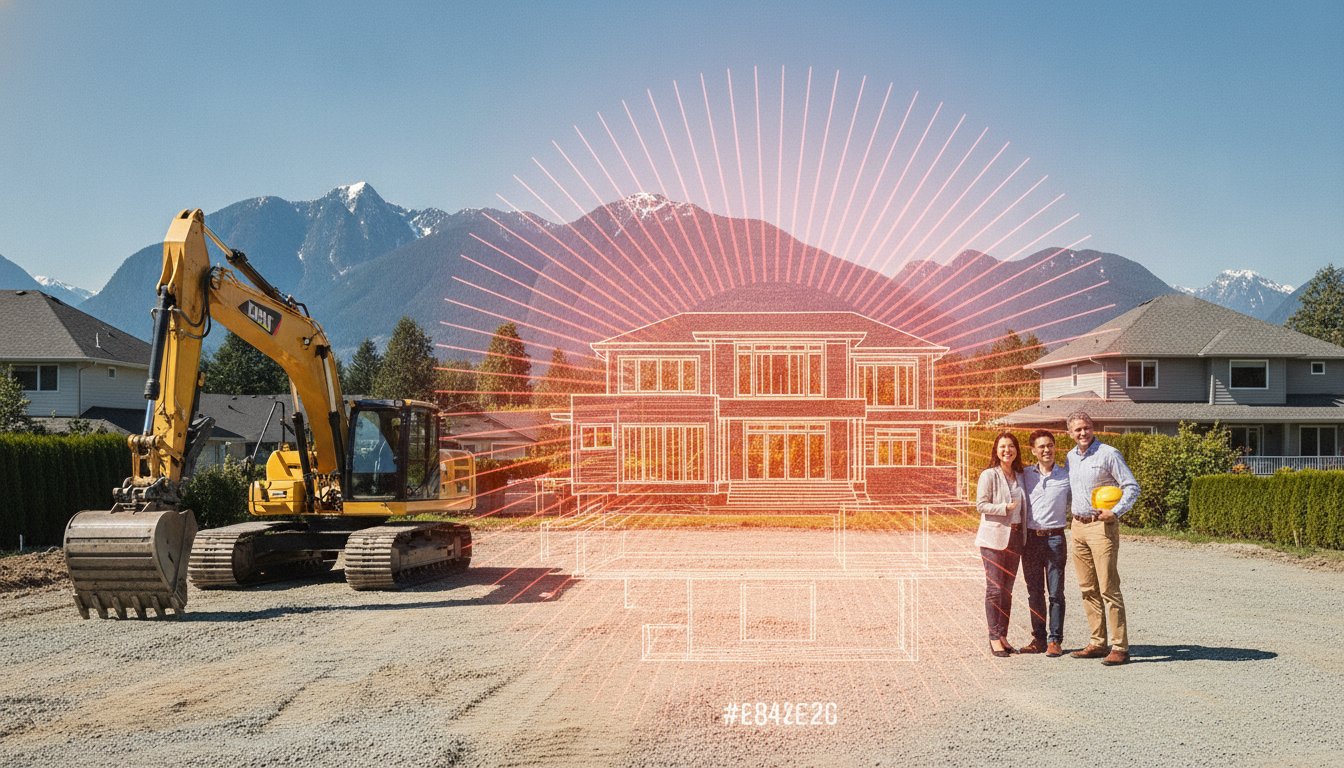
What if the most significant obstacle to your dream build isn't the architecture, but a refundable deposit held by the city? Calculating the cost to demolish a house in Richmond BC involves much more than just hiring a wrecking crew. You're likely feeling the weight of Richmond's strict "Green Demolition" bylaws and the anxiety of potential asbestos abatement fees. It's a complex starting line for any homeowner, but it shouldn't be a source of stress.
We understand that you want a clear, predictable path from a cleared lot to a finished luxury home. This guide provides a transparent breakdown of the 2026 budget components, from the $2 per square foot waste diversion deposits to the logistics of hazardous material removal. You'll learn how to navigate municipal regulations effectively, including the 70 percent recycling mandate, and ensure your site is perfectly prepped for the design-build phase. We'll show you how to turn a chaotic demolition into a strategic first step for your new custom residence.
Key Takeaways
- Identify the primary factors affecting the cost to demolish a house in Richmond BC, from local tipping fees to administrative permit expenses.
- Understand the mandatory abatement requirements for older structures to prevent hazardous material delays from derailing your site preparation budget.
- Master Richmond’s Green Demolition bylaws to achieve the 70 percent waste diversion rate and secure a full refund on your municipal deposits.
- Evaluate the benefits of deconstruction versus mechanical demolition to decide whether to prioritize material salvage or project speed.
- Learn how a unified design-build approach synchronizes site clearing with 3D VR planning for a seamless transition to the construction phase.
Understanding the Components of Demolition Costs in Richmond
Demolition is a precisely choreographed logistics operation rather than a simple act of destruction. When you calculate the cost to demolish a house in Richmond BC, you must look beyond the physical teardown to see the full financial picture. We categorize these expenses into "hard costs" and "soft costs." Hard costs include the visible work: the excavators, the fuel, and the skilled crews on the ground. Soft costs are the administrative hurdles, such as municipal permits, hazardous material testing, and the mandatory $2 per square foot refundable deposit required by Richmond’s Bylaw 9516.
Richmond’s pricing structure is unique compared to neighbouring Burnaby or Vancouver. Local tipping fees for waste disposal in Metro Vancouver can range from $50 to $150 per ton. Because the city mandates a 70 percent waste diversion rate, your crew must spend significant time sorting materials on-site. This environmental focus often shifts the budget, as the choice between Deconstruction vs. demolition becomes a financial decision based on labour hours versus landfill savings. A larger property or a complex structure with multiple additions will naturally increase the initial quote due to the sheer volume of debris that must be processed and hauled away.
The Price of Site Preparation
Accessibility is a silent budget killer. If your property is tucked away on one of Richmond's narrower side streets, transporting heavy machinery becomes a complex puzzle that requires extra time and pilot vehicles. You also need to account for the landscape. Clearing a flat, bare lot is straightforward; however, removing old-growth trees or extensive concrete hardscaping adds significant labour. Before any machine touches the structure, service disconnections for water, sewer, and gas must be finalized. The City of Richmond requires these disconnections to be handled by municipal crews, which involves specific fees that are non-negotiable and must be paid before work begins.
Labour and Machinery Requirements
Efficiency depends on the tools. A standard residential teardown typically utilizes large excavators equipped with hydraulic thumbs for sorting and high-capacity dump trucks for hauling. While the physical destruction might only take three to five days, the preparation and permit phase is much longer. Labour costs fluctuate depending on your strategy. Manual salvage requires more man-hours but can reduce disposal fees by hitting recycling targets. We ensure every milestone is tracked through our project management portal, giving you real-time visibility into how labour and equipment are being utilized. This transparency eliminates the typical industry ambiguity and ensures your lot is ready for the next phase of your custom build.
Major Factors That Shift Your Richmond Demolition Budget
While the base cost to demolish a house in Richmond BC is predictable, several variables can push your final invoice higher. The most significant budget shifter is the "Asbestos Factor." If your Richmond home was built before 1990, it likely contains hazardous materials in the drywall mud, flooring, or insulation. You cannot skip the testing phase. Every project requires a formal WorkSafeBC hazardous materials survey to identify these risks before the first excavator arrives.
Older Richmond lots often hide "ghost" infrastructure. Underground storage tanks (USTs) once used for heating oil are common. These hidden risks can significantly alter the cost to demolish a house in Richmond BC if they aren't identified during the initial site assessment. If an abandoned tank is discovered, it must be drained, removed, and the surrounding soil must be tested for contamination. This requires specialized equipment and environmental reporting that adds both time and expense to your project.
Abatement is a high-stakes process. Cutting corners doesn't just risk health; it invites massive WorkSafeBC fines and immediate project shutdowns. Professional removal involves sealed enclosures, negative air pressure, and rigorous air monitoring. These steps ensure lead, mercury, and asbestos are safely contained. Once the hazmat is cleared, structural materials also play a role. A wood-frame house is relatively simple to process, but a home with extensive concrete foundations or masonry requires more heavy-duty machinery and higher disposal fees due to the weight of the debris.
Hazardous Material Abatement (Hazmat)
Safe removal happens before the "big bite" of the excavator. We coordinate with certified specialists to ensure lead and asbestos are gone before the structure is disturbed. This proactive management keeps your timeline intact and your site compliant with provincial laws. Typical hazmat testing and air monitoring ensure that your property remains safe for the crew and the surrounding neighbourhood throughout the process.
Site Conditions and Tree Protection
Richmond’s urban forest is highly protected. You'll likely need an arborist report and sturdy tree protection fencing before your demolition permit is even issued. Damaging a protected tree can result in heavy penalties that far outweigh the cost of proper fencing. Additionally, Richmond's unique soil profile means that once the house is gone, geotechnical preparation begins. By using our project management portal, you can track these site-specific variables in real-time, ensuring you’re never surprised by a budget shift.
Navigating Richmond’s Demolition Permits and Green Requirements
Securing a demolition permit in Richmond is no longer a simple administrative formality. In 2026, the process is a rigorous compliance check designed to support the city’s sustainability goals. When you estimate the cost to demolish a house in Richmond BC, you must account for both the $250 non-refundable application fee and the substantial refundable deposits required under the Demolition Waste and Recyclable Materials Bylaw 9516. For most residential projects, this deposit is calculated at $2 per square foot of the structure. If you're clearing a large pre-1950 character home, you might see a refundable deposit as high as $14,650. This money stays with the city until you prove you've met their environmental standards.
The city's primary objective is waste diversion. You don't just tear a house down; you deconstruct it with the intent to recycle. Failure to document this process correctly results in the forfeiture of your deposit, effectively turning a temporary holding fee into a permanent expense. To avoid this, you must submit a comprehensive waste management plan alongside your proof of ownership, liability insurance, and any required tree protection permits. We manage this documentation through our project management portal, ensuring every receipt from the recycling depot is logged and ready for city inspection.
The Permit Application Process
Your journey begins at the Richmond Building Approvals department. Before the city issues a "Demolition, Moving or Salvage" permit, you must provide a rodent control certificate from a licensed pest control company. This ensures that clearing your lot doesn't displace pests into the surrounding neighbourhood. Simultaneously, you'll need to coordinate with BC Hydro and FortisBC. These utility providers must "cap-off" services at the property line. The city won't allow the "big bite" of an excavator to happen until they receive confirmation that all gas and electrical lines are safely disconnected and made redundant.
Salvage and Recycling Quotas
Richmond mandates a minimum 70 percent diversion rate for all demolition waste. This means the majority of your old home must end up at a recycling facility rather than a landfill. The city actively promotes its House Moving and Salvage Program, which allows you to list your home for 60 days to see if a salvage company wants to relocate the entire structure or harvest high-value materials like old-growth timber. If you choose traditional demolition, your contractor must provide weight tickets from authorized facilities to prove compliance. We prioritize these quotas not just for the environment, but to ensure your five-figure deposit returns to your construction budget where it belongs.

Mechanical Demolition vs. Deconstruction: Choosing the Right Method
Choosing between mechanical demolition and deconstruction is a strategic decision that directly impacts the cost to demolish a house in Richmond BC. Mechanical demolition is the industry standard for speed. It utilizes heavy excavators and brute force to bring down a structure in a matter of days. If your primary goal is to hit a specific construction start date, this is the most efficient path. However, it generates a high volume of mixed waste, which can lead to higher tipping fees at Metro Vancouver landfills if not sorted properly on-site.
Deconstruction, or hand-stripping, is the scalpel to mechanical demolition's hammer. This method involves manually dismantling the home to salvage high-value materials like old-growth Douglas fir, clear-grain cedar, and vintage fixtures. While the labour costs are significantly higher, you offset these expenses by reducing disposal fees and potentially earning tax receipts through material donations. Many homeowners find that a hybrid approach offers the best balance. By stripping out the most valuable or recyclable materials first and then using machinery for the remaining shell, you can meet municipal recycling mandates without ballooning your timeline.
When Speed is the Priority
In cases where a structure is severely decayed or contains safety hazards that prevent manual entry, mechanical demolition is the only viable option. This rapid approach allows you to clear the lot and begin excavation for your new foundation within a single week. We manage the entire logistics chain, including the necessary dust suppression and noise control measures required in dense Richmond neighbourhoods. This proactive management ensures that your project stays on schedule and maintains a positive relationship with your future neighbours from day one.
The Sustainability Advantage
Deconstruction makes meeting Richmond’s 70 percent waste diversion mandate effortless. By carefully separating materials, you ensure your municipal deposit is returned in full. There's also a design benefit to this method. Many of our clients choose to repurpose salvaged timber or architectural elements into their custom home design Vancouver. This adds a layer of history and character to your new luxury build that modern materials simply can't replicate. It’s an integrated way to honour the past while building for the future.
To see how we synchronize site clearing with our unified building process, explore our custom home construction services.
The Strategic Link Between Demolition and Your Custom Build
Viewing demolition as an isolated task is a common mistake that leads to budget overruns and scheduling friction. When you treat the cost to demolish a house in Richmond BC as the opening chapter of your construction journey, you gain a massive logistical advantage. Fragmented projects often suffer from "the gap," which is a period of weeks or months where the lot sits empty because the demolition crew and the builder aren't synchronized. By partnering with an integrated custom home builder Richmond BC, you eliminate this downtime. We coordinate the final site inspection and the arrival of the excavation team so that foundation pouring begins the moment the lot is clear.
This "one-roof" approach provides a level of accountability that third-party contractors simply can't match. Does the demolition crew know exactly where the new utility lines will enter the property? Does the builder understand which trees were flagged for protection during the teardown? These details are often lost in translation when multiple companies are involved. Our unified model ensures that every decision made during the clearing phase directly supports the eventual custom home construction Vancouver process, protecting your investment from the first swing of the hammer.
Visualizing the Future on a Cleared Lot
Why wait for a bare lot to start planning? We use advanced 3D VR walkthroughs to superimpose your new architectural vision onto the existing property while the old structure still stands. This technology allows you to realize the exact placement of windows to maximize natural light or ensure your new footprint respects Richmond's strict tree protection zones. It turns the abstract into the concrete. You can walk through your future kitchen and look out at your actual backyard before the first permit is even issued. This foresight prevents costly mid-construction changes and ensures the design is perfectly calibrated to the site's physical reality.
Seamless Project Management
Our project management portal acts as the digital nervous system for your build. You can log in at any time to view hazardous material clearance certificates, recycling weight tickets, and municipal permit approvals in real-time. This transparency replaces the typical anxiety of site clearing with a sense of controlled progress. Whether you are pursuing a single-family residence or a multiplex development Vancouver strategy, having a single point of contact ensures that no detail is overlooked. We take full responsibility for the transition from a cluttered lot to a pristine construction site, making the entire journey as refined as the home we're building for you.
Securing a Clean Slate for Your Custom Build
Clearing a site in Richmond is a complex administrative and environmental undertaking. You've seen how the cost to demolish a house in Richmond BC is influenced by everything from pre-1990 hazardous material abatement to the city's strict 70 percent recycling mandate. Navigating these regulations doesn't have to be a source of frustration. By choosing an integrated design-build partner, you ensure that your municipal waste deposits are protected and that your site preparation aligns perfectly with your new architectural vision.
We provide a unified "one-roof" solution that replaces project fragmentation with disciplined, transparent execution. Our project management portal keeps you informed at every milestone, from the initial permit approval to the final recycling receipt. You deserve a transition that is as refined and predictable as the luxury home we'll build in its place. Our expertise in Richmond's Green Demolition requirements ensures that your lot is cleared responsibly and efficiently.
Start Your Richmond Rebuild with a Professional Consultation to see how our full-service integration and real-time tracking can accelerate your project. Your vision for a modern Richmond home starts with a perfectly prepared foundation. Let's build something exceptional together.
Frequently Asked Questions
How much does a demolition permit cost in Richmond BC for 2026?
A demolition permit in Richmond involves a $250 non-refundable application fee as of early 2026. Additionally, you must provide a refundable deposit of $2 per square foot of the structure. For a standard 2,000-square-foot home, this means an upfront payment of $4,000 in addition to the base fee. These costs are essential to factor into your total cost to demolish a house in Richmond BC.
What is the Richmond Green Demolition Program and does it apply to me?
The Green Demolition Program, governed by Bylaw 9516, applies to every residential demolition project within the city. It mandates that at least 70 percent of the debris from your site must be diverted from landfills through recycling or salvage. Compliance is tracked through weight tickets from authorized facilities. If you meet this threshold, the city returns your square-foot deposit in full.
How long does it take to get a demolition permit in Richmond?
Obtaining a demolition permit typically takes between three to six weeks, though timelines vary based on seasonal demand. The clock only starts once you've submitted a complete application, including your rodent control certificate and arborist report. We recommend starting this process early to ensure your site is ready for the transition to the design-build phase without unnecessary delays.
Do I need to remove asbestos before demolishing my house?
Yes, you must remove all identified asbestos and other hazardous materials before mechanical demolition begins. WorkSafeBC regulations require a professional hazmat survey for any home built before 1990. Certified specialists must then perform the abatement and provide a clearance letter. Skipping this step is illegal and will result in significant provincial fines and an immediate project shutdown.
Can I demolish my house myself in Richmond to save money?
You cannot legally demolish a house yourself in Richmond without meeting strict municipal licensing and safety requirements. The process involves high-risk activities like utility capping, hazardous material handling, and heavy machinery operation. Most homeowners hire insured professionals who can guarantee the 70 percent recycling rate required to recoup their substantial cost to demolish a house in Richmond BC deposits.
What happens to the $14,650 deposit for pre-1950 homes?
The $14,650 deposit for pre-1950 character homes acts as a financial guarantee for the city’s salvage requirements. This specific amount is held to encourage deconstruction and the recovery of high-value heritage materials. To get this money back, you must provide the city with weight tickets proving that the required percentage of materials was recycled or salvaged at an authorized facility.
Do I need a separate permit for tree removal during demolition?
Yes, tree removal requires a separate permit under Richmond’s Tree Protection Bylaw. Even if a tree is in the way of your new footprint, you cannot remove it without municipal approval and an arborist's assessment. You'll also need to install sturdy tree protection fencing around any trees that are remaining on the lot before your demolition permit is issued.
How do I disconnect my utilities before the demolition crew arrives?
You must coordinate utility disconnections through three separate entities. Contact BC Hydro for electricity, FortisBC for gas, and the City of Richmond Tax Department for water service disconnections. These "cap-offs" must be completed at the property line. The city requires written confirmation that all services are redundant before they will release your final demolition permit.


